featured trees, shrubs and plants
-
Abelia is a popular, low-maintenance flowering shrub known for its fragrant, trumpet-shaped flowers (white to pink), attractive foliage, and resilience, thriving in full sun to part shade in USDA zones 6-9, tolerating heat, drought, and various soils, making it a versatile choice for hedges, borders, and pollinator gardens, generally pruned in late winter for best bloom.
Key Characteristics
Flowers: Small, tubular, fragrant, white to pink, blooming summer into fall.
Foliage: Glossy green leaves often turning bronze, purple, or variegated (gold, cream, pink) in cooler weather.
Growth Habit: Arching, dense, multi-stemmed shrub, typically 3-8 feet tall and wide.
Attracts: Bees, butterflies, and hummingbirds.
Growing Conditions & Care
Sunlight: Full sun for best flowering and color, but tolerates partial shade.
Soil: Prefers moist, well-drained soil but is adaptable to clay, sand, or loam.
Water: Moderate; water regularly until established, then less frequently.
Hardiness: Zones 6-9 (some varieties handle Zone 5 or warmer zones like 9-11).
Pruning: Late winter/early spring before new growth, as they bloom on new wood.
Landscape Uses & Benefits
Drought & Erosion Tolerant: Excellent for tough spots.
Deer Resistant: A good choice for areas with deer pressure.
Low Maintenance: Very tough and requires minimal fuss.
Versatile: Great for hedges, foundation plantings, or as a specimen.
Popular Varieties
-
Hibiscus syriacus (Rose of Sharon) needs full sun and well-draining soil, preferring consistent moisture but tolerating drought once mature; water regularly, especially in heat, but avoid waterlogging. Prune in late winter or early spring to shape and encourage blooms on new wood, and fertilize lightly with a balanced or high-potassium feed in spring. Mulch to retain moisture, protect roots, and control weeds, while watching for pests like aphids or Japanese beetles.
Light & Soil
Full sun (6-8+ hours) for best flowering; tolerates light shade but with less bloom.
Soil:
Well-draining, fertile soil; adapts to various types (loamy, sandy, clay) and pH levels (slightly acidic to neutral).
Watering & Feeding
Keep consistently moist, especially when young or in containers; established plants handle drought but thrive with about 1 inch of water weekly.
Apply a slow-release balanced or high-potassium fertilizer in spring; compost also works well.
Pruning & Maintenance
Pruning: Late winter/early spring, removing dead/damaged wood and shaping; more pruning means bigger but fewer flowers.
Deadheading: Remove spent flowers to prevent excessive self-seeding.
Mulch: Apply 2-3 inches around the base for moisture retention and winter protection.
Winter & Pests
Winter Care: Hardy; mulch in colder zones; remember they leaf out late in spring.
Pests: Watch for aphids, mealybugs, Japanese beetles; powdery mildew can occur in humid conditions.
-
Apple trees (Malus domestica) are deciduous fruit trees grown for their diverse, flavorful fruit, requiring full sun, well-drained soil, and cross-pollination from a different variety for fruit production. Grown as dwarf, semi-dwarf, or standard sizes, they are known for being beginner-friendly, but require proper pruning and care; grafted trees typically start bearing fruit within 2-4 years, offering sweet to tart apples for fresh eating, baking, and cider.
Types & Sizes
Dwarf: Grow to 8-10 ft tall, ideal for small spaces and containers, producing full-sized apples.
Semi-Dwarf: Mature around 12-15 ft tall, offering high yield per square foot.
Standard: Can reach 15-25 ft tall, providing shade and large harvests.
Growing Conditions
Sunlight: Need at least 8 hours of full sun daily.
Soil: Require well-draining soil; plant in spring or fall.
Pollination: Most varieties need a different apple tree (or crabapple) nearby for cross-pollination, relying on bees.
Chill Hours: Different varieties need specific amounts of winter cold (chill hours); coastal California varieties, like 'Beverly Hills,' need fewer.
Planting & Care
Planting: Dig a hole for the root ball, ensuring the graft union (swollen area) stays 1-2 inches above the soil.
Support: Stake dwarf trees immediately and use trunk guards for protection.
Pruning: Annual pruning keeps trees healthy and productive, balancing root and top growth.
Fruiting
Timing:
Dwarf trees often fruit in 2-3 years; standard trees can take up to 8 years.
Harvest:
Fruit appears from summer to fall, depending on the variety, offering diverse flavors.
-
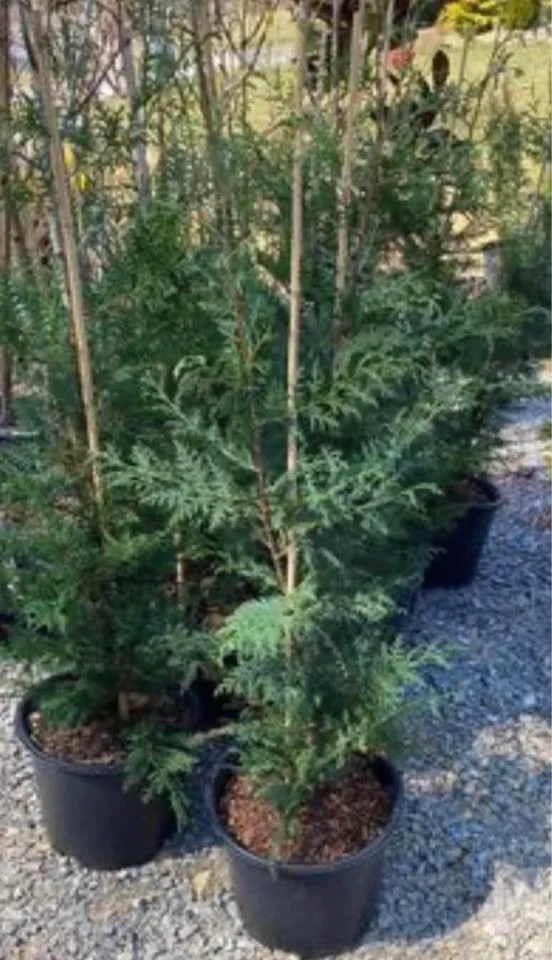
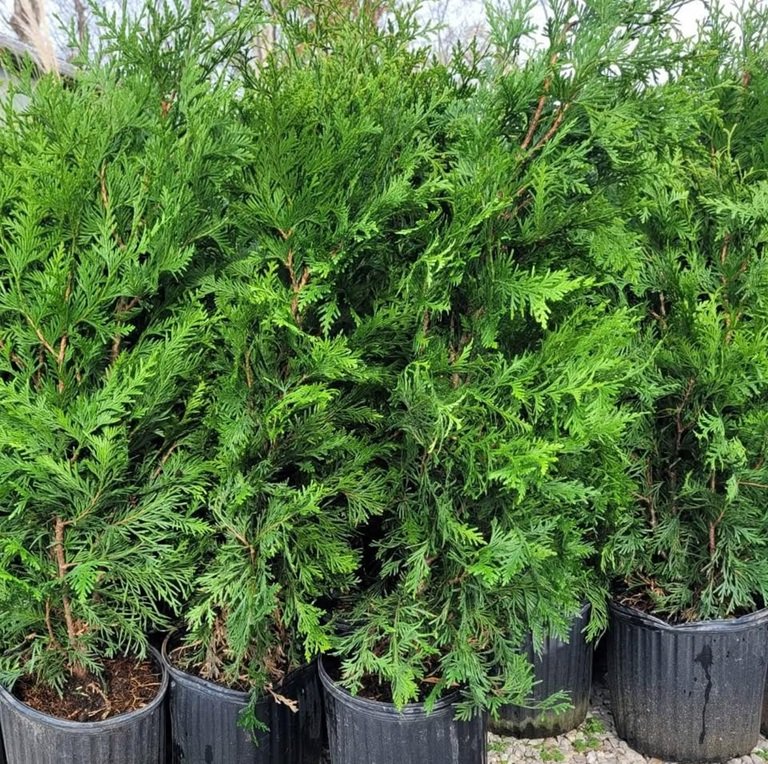
Arborvitae (genus Thuja), known as the "tree of life," are versatile, low-maintenance evergreen trees and shrubs popular for creating natural privacy screens and hedges. They feature soft, scale-like foliage arranged in flattened, fan-like branchlets and come in various shapes and sizes.
Popular Arborvitae Varieties
Common types of arborvitae range from narrow, columnar forms perfect for small yards to large, fast-growing hybrids for substantial privacy buffers.
Emerald Green Arborvitae (Thuja occidentalis 'Emerald Green')
Size: Grows to a mature height of 8–12 feet with a narrow, 3–4 foot width, making it ideal for tight spaces and planting along fences or foundations.
Features: Known for its tidy, symmetrical, columnar shape and vibrant, rich green foliage that resists winter browning.
Green Giant Arborvitae (Thuja plicata x standishii 'Green Giant')
Size: A large hybrid that grows rapidly, often 3 feet or more per year, and can reach significant heights (up to 30 feet or more).
Features: Praised for its hardiness, rapid growth, and minimal maintenance, forming a dense, effective privacy screen quickly.
Full Speed A Hedge American Pillar Arborvitae (Thuja occidentalis 'American Pillar')
Size: Extremely narrow, growing up to 30 feet tall but only about 4 feet wide.
Features: An excellent, fast-growing option for narrow borders, offering a strong resistance to extreme heat, cold, wind, and ice.
Morgan Chinese Arborvitae (Thuja orientalis 'Morgan')
Size: A dwarf evergreen suitable for tight spaces and pots.
Features: Puts on a seasonal color show, with foliage transforming from golden/lime green in summer to rusty orange in fall and burgundy/purple in winter.
Care and Maintenance
Arborvitae are generally low-maintenance plants that can adapt to a range of conditions, but they thrive with proper care.
Sunlight: They perform best in full sun (at least 6-8 hours of sunlight) but can tolerate light shade; in heavy shade, foliage can become thin and open.
Soil: They prefer moist, rich, well-drained soil with a neutral to alkaline pH. They do not like their roots to sit in soggy soil.
Watering: New plantings require consistent moisture to establish their root systems. Established trees need deep watering during prolonged periods of drought. Watering deeply encourages roots to grow downward.
Mulch & Fertilizer: Apply a layer of compost or mulch around the root zone to preserve soil moisture and regulate temperature. A slow-release, high-nitrogen fertilizer can be applied in the spring.
Pests & Problems: While generally disease-resistant, young trees may need protection from deer browsing. Bagworms can be an occasional issue.
-
Aucuba 'Gold Dust' (Aucuba japonica 'Variegata') is a popular evergreen shrub celebrated for its thick, leathery dark green leaves splashed with golden-yellow "dusting". Often called Spotted Laurel, it is highly valued by gardeners for its ability to thrive in deep shade and difficult urban conditions where other plants might fail.
Core Growing Requirements
Light: Prefers partial to full shade. Avoid direct afternoon sun, which can scorch the leaves and cause them to turn black.
Water: Needs moderate moisture; keep the soil well-drained to avoid root rot. It is relatively drought-tolerant once established.
Soil: Grows best in rich, moist, and well-draining soil with a pH between 6.0 and 7.5.
Hardiness: Typically hardy in USDA Zones 7–10, though it may survive in Zone 6 if protected.
Physical Characteristics
Size: A slow-growing shrub that typically reaches 4–6 feet tall and wide, though some older specimens can reach 10 feet.
Foliage: Glossy, evergreen leaves that provide year-round interest and "brighten" dark garden corners.
Reproduction: Dioecious (plants are either male or female). Female plants produce bright red berries in the fall if a male plant is nearby for pollination.
Common Uses & Care
Landscaping: Ideal for privacy hedges, foundation plantings, or as a "thriller" in large outdoor containers.
Indoor Use: Often kept as a houseplant in colder climates due to its shade tolerance and air-purifying qualities.
Pruning: Low maintenance; prune in late winter or early spring before new growth begins if shaping is needed.
Resistance: Noted for being deer-resistant and tolerant of salt, air pollution, and poor soil.
-
View all
An azalea bush is a popular, colorful flowering shrub (a type of Rhododendron) known for vibrant spring blooms in many colors, needing acidic, well-drained soil, and preferring morning sun or dappled shade, with varieties ranging from small ground covers to larger specimens used in borders, containers, or hedges for year-round landscape appeal. Proper care involves acidic soil (pH 5.0-6.0), mulch, appropriate watering, and pruning just after flowering to maintain size and encourage next year's buds
.
Key Characteristics & Growing Conditions
Type: Flowering shrub, genus Rhododendron.
Size: Varies greatly, from 2 feet to over 20 feet tall.
Light: Morning sun or dappled shade; avoid intense afternoon sun.
Soil: Rich, acidic (pH 5.0-6.0), well-drained soil; amend with organic matter.
Water: Keep consistently moist but not waterlogged; mulch helps retain moisture.
Bloom Time: Primarily spring, but some rebloom; flowers in white, pink, red, purple, etc..
This video provides an overview of azalea care:
59s
Planting & Care Tips
Planting: Late spring or early fall; ensure the hole is wider than the root ball but not too deep.
Fertilizing: Use an acid-loving fertilizer after blooming, not in fall.
Pruning: Best done right after flowers fade to shape the plant and avoid cutting off next year's buds.
Mulching: Apply mulch to keep roots cool and moist.
Landscape Uses
Foundation plantings
Woodland gardens
Hedges and screens
Containers (especially for indoor/outdoor use)
-
View all
A barberry bush is a hardy, thorny, deciduous shrub known for its colorful foliage (greens, yellows, reds, purples), bright yellow flowers in spring, and red berries in fall, offering low-maintenance appeal as hedges or borders, but some types, like Japanese Barberry, are highly invasive, displacing native plants and harboring ticks. Key types include Common Barberry (3-pronged thorns, serrated leaves) and Japanese Barberry (single spines, smooth leaves), both prized for deer resistance and landscape color but needing responsible management.
Key Characteristics
Foliage: Varies by type; can be green, golden, or reddish-purple, often changing color through the seasons.
Thorns: Distinctive, sharp thorns, often in clusters (common) or single (Japanese).
Flowers: Small, yellow, often fragrant, appearing in drooping clusters in spring.
Fruit: Bright red, oblong berries that persist into winter, attracting birds.
Growth: Hardy, adaptable to sun/shade, well-draining soil, and drought-tolerant once established.
Popular Varieties & Uses
Japanese Barberry (Berberis thunbergii): More compact, popular for borders, but highly invasive.
Common Barberry (Berberis vulgaris): Taller, arching, invasive in many areas, known for Lyme disease association.
Cultivars: Many cultivated varieties offer enhanced colors (e.g., 'Admiration', 'Crimson Pygmy').
Uses: Excellent for hedges, privacy screens, foundation plantings (due to thorns), and adding seasonal color.
Considerations (Invasiveness)
"Tick Magnets": Dense barberry thickets provide ideal shelter for deer and rodents, increasing tick populations, notes UConn IPM Program and the Vermont Fish & Wildlife Department.
Habitat Disruption: They escape gardens, form dense stands, and outcompete native plants in woodlands, making them invasive in many regions.
Care & Maintenance
Pruning: Best done in late winter/early spring, wearing gloves to protect from thorns, to shape and remove old growth, according to Plant Detectives.
Sunlight: Thrives in full sun for best color, but tolerates part shade.
Soil: Prefers well-drained soil.
-
A birch tree is a popular landscaping choice known for its distinctive peeling bark and attractive foliage, which often turns golden yellow in the fall. They are available in various types, from large shade trees to smaller dwarf shrubs.
You have a strong interest in gardening, landscaping, and specific plant brands like Proven Winners. Based on this, here are some birch options and general information you might find relevant for your landscape in Tennessee.
Personalized Birch Tree Options
These options align with your interest in specific plant cultivars and quality brands for your landscaping needs.
'Avalanche' Birch Tree (Proven Winners Brand)
This variety is praised for its low-maintenance nature and good resistance to the bronze birch borer, a common pest that can damage other birch species. This aligns with your interest in durable trees.
It features striking white bark that starts as creamy tan with pink hints when young, maturing to a bright white.
According to Proven Winners, it has a manageable, more compact size than average birches, making it suitable for courtyards, driveways, or island beds.
'Cesky Gold' Dwarf Birch (Proven Winners Brand)
This is a dwarf shrub variety, reaching only 2 to 4 feet in height, perfect for borders, rock gardens, or containers.
Reviewers on the Proven Winners website highlight its exceptional cold tolerance and cheerful chartreuse (yellow-green) foliage that has red and orange hues in spring, providing season-long color interest.
Its small size and adaptability to pruning make it a versatile choice for structured landscape design.
'Heritage' River Birch
This fast-growing native tree is known for its unique, flaky bark that peels in shades of cinnamon, tan, and cream.
It is a great option for Tennessee as it is native to the region's flood plains and tolerates wet, clay soils well, though it can also tolerate modest drought once established.
Reviewers on FastGrowingTrees.com mention it grows quickly, adding character to landscapes and reaching mature heights of 40-50 feet.
General Birch Care & Tips
Here are some general tips for growing birch trees, which complements your interest in the practical aspects of gardening.
Planting Location: Birch trees generally prefer moist, well-drained soil. While some varieties like the river birch tolerate wet conditions, others like paper birch prefer cooler soil and may struggle in extreme heat.
Sunlight: Most birch varieties thrive in full sun to part shade conditions. In Southern zones like Tennessee, some afternoon shade can be beneficial to prevent heat stress.
Maintenance: Birches are generally low-maintenance plants. Pruning is typically only needed to remove damaged branches or for shaping, as many modern varieties naturally grow into attractive forms.
Wildlife: Planting birch can attract local wildlife like birds and butterflies.
-
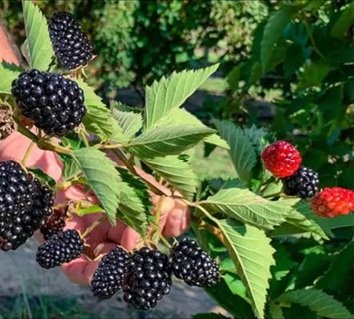
A blackberry bush is a thorny or thornless woody perennial plant in the Rubus genus, known for its delicious, juicy aggregate fruit (blackberries) that develop from white-to-pink flowers on two-year-old canes, requiring support like trellises for taller varieties and thriving in full sun with well-drained soil, spreading vigorously via suckers to form dense thickets. These plants produce fruit on "floricanes" (second-year canes) and are rich in antioxidants, fiber, and nutrients, making them popular for home gardens and commercial cultivation, with many self-pollinating varieties available.
Key Characteristics
Growth Habit:
Arching or trailing stems (canes) with sharp thorns or thornless varieties; can grow quite tall, often needing support.
Leaves:
Compound, with 3-5 toothed leaflets, medium green on top, paler underneath.
Flowers:
White to pink, five petals, blooming in late spring/early summer.
Fruit:
Starts red, turns glossy black when ripe; deep violet to black, sweet, juicy, and composed of many small drupelets.
Lifecycle:
First-year canes (primocanes) grow, then in the second year, they become "floricanes" and produce flowers and fruit before dying back.
Growing & Care
Sun: Needs 6-8 hours of full sun daily.
Soil: Prefers well-drained, slightly acidic soil but adaptable; amend clay soils with organic matter.
Water: Keep consistently moist but not waterlogged.
Support: Trellising helps manage their vigorous growth and keep fruit off the ground.
Planting: Best planted in late fall or early spring.
Propagation: Spreads easily via root suckers, forming dense patches.
Varieties & Types
Erect: Upright growth, like 'Ouachita' or 'Natchez'.
Trailing: Lower growing, often requiring more support.
Thornless: Cultivars like 'Prime-Ark Freedom' or 'Triple Crown' offer easy harvesting.
Primocane-fruiting: Produce fruit on first-year canes, like 'Prime-Ark 45®'.
Health Benefits
Rich in antioxidants, vitamins (C, K), and manganese.
High in dietary fiber, aiding digestion.
Low in calories and carbohydrates.
-
Bluebeard (Caryopteris), also known as Blue Mist Shrub or Blue Spirea, is a mounding deciduous shrub prized for its vibrant blue-to-purple flowers that bloom in late summer and fall. It is highly valued for providing late-season color and attracting pollinators like bees, butterflies, and hummingbirds when many other plants have finished blooming.
Core Characteristics
Appearance: Typically grows 2–4 feet tall and wide. It features aromatic, lance-shaped leaves that can be silvery-green, dark green, or even golden, depending on the cultivar.
Hardiness: Generally hardy in USDA Zones 5–9. In colder climates, it may die back to the ground in winter but will regrow and bloom in the spring since it flowers on new wood.
Resilience: It is notably deer-resistant and drought-tolerant once established.
Popular Cultivars
Beyond Midnight®: Features deep blue flowers and glossy, dark green foliage; very compact (2–3 ft tall/wide).
Dark Knight: Known for having the darkest blue-purple flowers.
Sunshine Blue® II: Distinctive bright yellow-gold foliage paired with deep blue flowers.
Longwood Blue: A taller variety reaching up to 4 feet with sky-blue flowers and silvery leaves.
Beyond Pink'd®: A unique variety that produces deep pink flower clusters instead of blue.
Planting and Care
Sunlight: Requires full sun (at least 6 hours daily) to maintain a dense shape and maximize flower production.
Soil: Must be planted in well-drained soil. It will not tolerate wet or "soggy feet," which can cause root rot.
Pruning: It is best to prune the bush hard in late winter or early spring (down to 6–12 inches or just above new growth) to encourage vigorous new stems and more abundant blooms.
Fertilizing: It generally requires little to no fertilizer. Over-fertilizing can lead to excessive leafy growth and fewer flowers.
-
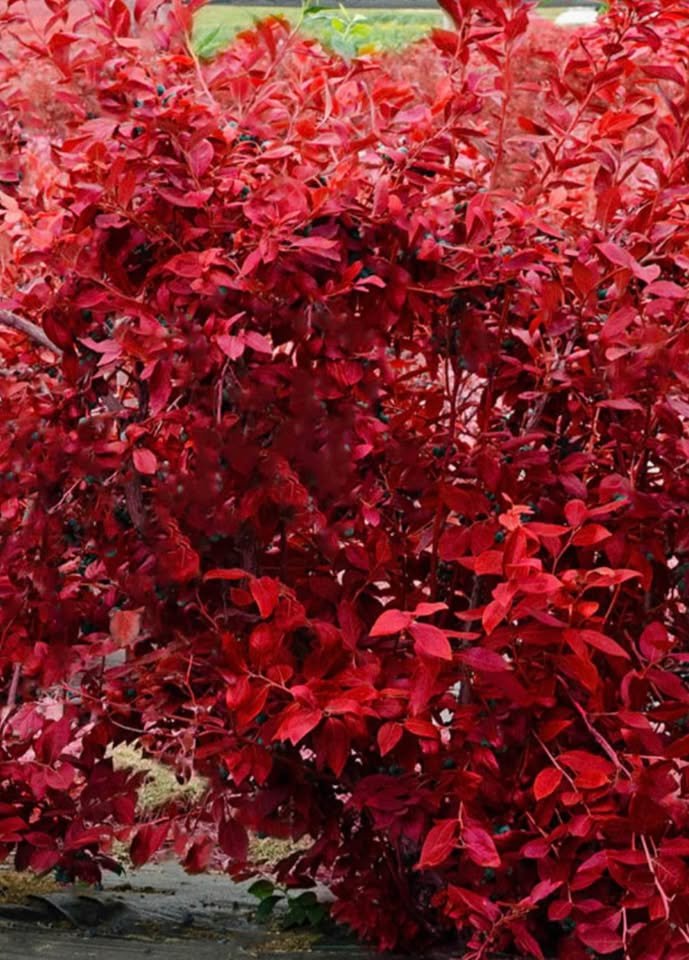
Blueberry bushes are attractive, long-lived perennial shrubs that provide edible fruit and striking seasonal foliage. As of 2026, they remain a top choice for home gardeners due to their relative ease of care and high nutritional value.
Popular Varieties and Pricing
Modern nurseries offer several types tailored to specific climates. For 2026, common price ranges for established plants are typically $14 to $70 depending on maturity and pot size.
Northern Highbush: Best for colder regions (Zones 4-7); includes popular cultivars like 'Bluecrop' and 'Duke'.
Southern Highbush: Adapted for warmer climates with lower chill requirements.
Rabbiteye: Vigorous, heat-tolerant southern species (Zones 7-9) such as 'Brightwell' and 'Premier'.
Lowbush: Low-growing groundcover varieties (1-2 feet) producing small, sweet "wild" berries.
Specialty: Varieties like 'Sweetheart' offer two harvests per year, while 'Pink Lemonade' produces unique bright pink fruit.
Essential Growing Requirements
Success with blueberries depends primarily on soil acidity and consistent moisture.
Soil pH: Must be highly acidic (4.0 to 5.5). If your soil is too alkaline, leaves will turn yellow (iron chlorosis).
Sunlight: Requires full sun (at least 6-8 hours daily) for maximum fruit production.
Watering: Shallow-rooted plants need 1 to 2 inches of water per week. Containers may require daily watering in summer.
Pollination: While many are self-fertile, planting two or more different varieties with overlapping bloom times significantly increases berry size and yield.
Care and Maintenance
Planting: Early spring is ideal. Dig a hole twice as wide as the root ball and amend with peat moss or pine bark to increase acidity.
Mulching: Maintain 2-4 inches of organic mulch (wood chips or pine needles) to conserve moisture and suppress weeds.
Pruning: Avoid heavy pruning for the first 2-3 years. On mature bushes, remove the oldest canes (6+ years old) in late winter to stimulate new, productive growth.
Protection: Netting is often necessary as the fruit ripens to prevent birds from eating the entire crop.
-
A boxwood shrub (Buxus) is a popular, versatile evergreen prized for its dense foliage, deer resistance, and adaptability in landscapes, perfect for hedges, borders, or focal points, thriving in well-drained soil with sun to partial shade, requiring regular watering when establishing but tolerating drought once mature, and easily shaped with pruning for formal or natural looks. Key varieties like English, American, and Japanese boxwood offer diverse sizes and forms, from compact to tall, but can face issues like boxwood blight or pests, so proper site selection and care are essential.
Key Characteristics
Foliage: Small, glossy green leaves that provide year-round color and structure.
Growth Habit: Varies by type, ranging from compact, rounded forms (like 'Green Gem') to upright, pyramidal ones (like 'Green Mountain').
Uses: Excellent for formal hedges, knot gardens, foundation plantings, topiaries, and containers.
Growing Conditions
Sunlight:
Prefers full sun to partial shade; afternoon shade helps prevent leaf scorch in hot climates.
Soil:
Needs well-drained, loamy soil, tolerating neutral to slightly alkaline pH.
Watering:
Water deeply and regularly during the first year; established plants are drought-tolerant but benefit from water during dry spells.
Hardiness:
Generally hardy in USDA Zones 5-9, with some cultivars extending to Zone 4.
Care & Maintenance
Planting: Best in spring or fall in a spot with good air circulation and drainage.
Pruning: Trim in late winter/early spring before new growth starts; light trims can maintain shape through summer.
Fertilizing: A balanced fertilizer in spring helps, but avoid over-fertilizing.
Mulching: Apply mulch to retain moisture and reduce stress.
Common Problems
Pests: Watch for leaf miners, spider mites, and psyllids.
Diseases: Boxwood blight (a fungal disease) can be an issue, especially in shady, damp areas.
Winter Damage: Sunscald or frost can damage foliage; consistent watering in fall helps.
-
Buckthorn refers to a group of deciduous shrubs or small trees within the Rhamnus and Frangula genera. Some species like common buckthorn (Rhamnus cathartica) and glossy buckthorn (Frangula alnus) are considered invasive in many regions, including parts of North America, where they can outcompete native plants and negatively impact ecosystems.
However, non-invasive cultivars have been developed for ornamental use, most notably the 'Fine Line' buckthorn.
Key Information on Buckthorn
Invasive Species: Common and glossy buckthorn are non-native, invasive species in many parts of the US, including states like Minnesota, Vermont, and Illinois. They grow aggressively, produce many seeds which are widely dispersed by birds (due to their laxative effect), and form dense thickets that shade out native vegetation.
Native Species: There are also native buckthorn species, such as the alderleaf buckthorn (Rhamnus alnifolia), which are not invasive and play an important role in the local ecosystem.
Non-Invasive Cultivars: The 'Fine Line' buckthorn (Rhamnus frangula 'Ron Williams') is a popular, non-invasive selection with very low seed viability, making it an environmentally responsible choice for landscaping. It features a narrow, columnar form and delicate, fern-like foliage that turns golden-yellow in the fall.
For You: Non-Invasive 'Fine Line' Buckthorn
The 'Fine Line' buckthorn is a great option for adding vertical interest to your garden without the worry of it spreading invasively. You might be interested in this product because your past gardening interests indicate a preference for unique and well-performing plants.
Proven Winners 1 Gal. Fine Line Buckthorn (Rhamnus) Live Shrub: This shrub reaches 5-7 feet in height and only 2-4 feet wide at maturity, making it suitable for narrow spaces or container planting. It is deer-resistant, drought-tolerant once established, and thrives in part to full sun.
-
A Burning Bush (scientific name Euonymus alatus) is a popular, fast-growing, deciduous shrub known for its brilliant, fiery red fall foliage, but it's also a highly invasive plant in North America, forming dense thickets that outcompete native species, though it's a valuable food source for birds in winter. It's easily grown in well-draining soil with sun or partial shade but is restricted or banned in many states due to its invasiveness.
Key Characteristics
Foliage: Bright red in autumn, earning its name.
Growth: Fast-growing, reaching 10-15 feet, with distinct corky "wings" on its branches (hence alatus, meaning winged).
Habitat: Adaptable to various soils and light conditions (full sun to shade).
Fruit: Produces reddish-purple fruits in fall that split open to reveal seeds, eaten by birds, aiding spread.
Escaped Cultivation:
Introduced from Asia in the 1800s, it escaped gardens and naturalized widely.
Ecological Threat:
Forms dense stands, outcompeting native plants in forests, fields, and along roadsides.
Deer-Resistant:
White-tailed deer avoid it, further damaging native plants by concentrating browse on them.
Regulations:
Considered a noxious weed or invasive in many states (e.g., banned in MA, NH, restricted in MN).
Planting: Best in well-draining soil, full sun for best color; prune to manage size.
Water: Drought-tolerant once established, needs moderate moisture.
Removal: Small plants can be dug out; larger ones may need cutting and herbicide application, requiring persistence.
-
View all
Butterfly bush (Buddleja) is a fast-growing shrub known for its nectar-rich flowers that attract pollinators, thriving in full sun and well-drained soil, requiring yearly pruning for shape and blooms, but older varieties can be invasive, spreading aggressively and displacing native plants, making sterile cultivars a better choice for responsible gardening.
Sun: Full sun (6-8+ hours daily) is essential for best flowering.
Soil: Prefers moist, well-drained soil; tolerates various types but hates wet feet.
Water: Water freely when growing, especially in summer if dry; established plants are drought-tolerant.
Fertilizer: Avoid fertilizing; it promotes leaf growth over flowers.
Pruning: Prune heavily in late winter/early spring to encourage new growth and large flowers; deadhead spent blooms to prevent seeding.
Winter Care: In colder zones (5-6), it often dies back to the ground but regrows vigorously; mulch around the base in winter for protection.
Invasive Potential & Alternatives
Invasive: The species Buddleja davidii self-seeds aggressively and can become invasive in natural areas, outcompeting native plants that caterpillars need.
Sterile Cultivars: Look for sterile or low-seeding varieties (like those from the Lo & Behold® or Pugster® series) to enjoy blooms without the invasive risk.
Attracts butterflies with abundant nectar.
Long bloom period, often into fall.
Available in many colors (purple, pink, white) and sizes, including dwarf types for containers.
-
Callicarpa, commonly known as Beautyberry, is a genus of deciduous shrubs and small trees celebrated for their spectacular clusters of iridescent purple or magenta berries that persist through fall and into winter.
Key Characteristics
Fruit: Small, glossy berries—most often bright violet or magenta—that encircle the stems in dense clusters. White-berried cultivars, such as C. americana 'Lactea', also exist.
Foliage & Flowers: Green leaves emerge in spring, followed by inconspicuous lavender-pink flowers in summer. Some varieties, like 'Pearl Glam', feature dramatic dark purple foliage.
Wildlife Value: The berries are a critical food source for over 40 species of songbirds. Additionally, the crushed leaves of certain species, like the American beautyberry, contain natural compounds that repel mosquitoes and ticks.
Popular Species & Cultivars
American Beautyberry (Callicarpa americana): Native to the southeastern US. It grows 3–8 feet tall and is drought-tolerant once established.
Purple Beautyberry (Callicarpa dichotoma): An Asian species with a more compact, arching habit, typically growing 2–4 feet tall.
Bodinier's Beautyberry (Callicarpa bodinieri 'Profusion'): Known for its heavy berry production and bronze-tinted spring foliage.
'Pearl Glam': A hybrid noted for its upright habit and dark purple leaves.
Care and Maintenance
Light: Prefers full sun for the best berry production, though it can tolerate partial shade.
Soil: Best in well-drained soil; it is generally adaptable to various soil types once established.
Pruning: Since flowers and berries grow on new wood, plants can be pruned back hard (to about 1 foot) in late winter or early spring to encourage vigorous new growth and more fruit.
Hardiness: Hardiness varies by species; C. americana is typically hardy in zones 7–11, while Asian species like C. dichotoma are hardier (zones 5–8).
-
Calycanthus, commonly known as Sweetshrub or Carolina Allspice, is a genus of deciduous shrubs prized for their unique, aromatic flowers and disease-resistant nature. Native to North America and East Asia, these plants are staples in woodland gardens and residential landscapes for their fragrant blooms that can smell like a blend of strawberry, pineapple, and banana.
Primary Species and Varieties
Calycanthus floridus (Eastern Sweetshrub): The most common species, native to the Southeastern U.S.. It features deep maroon to reddish-brown flowers and grows 6–12 feet tall. Notable cultivars include:
'Michael Lindsey': Considered the best red-flowered form with excellent glossy foliage.
'Athens': A rare variety with fragrant yellow-chartreuse blooms.
Calycanthus occidentalis (California Sweetshrub): Native to California, this species has larger, waterlily-like maroon flowers and aromatic foliage often described as smelling like a "wine cellar".
Calycanthus 'Aphrodite': A popular 2026 hybrid known for its large, bright red, magnolia-like flowers that rebloom throughout the summer.
Calycanthus 'Venus': A unique hybrid producing large, creamy white flowers with purple and yellow centers.
Growing Conditions & Care
Hardiness: Most varieties thrive in USDA Zones 5–9.
Light: Adaptable from full sun to part shade. Plants grown in full sun are typically denser and bloom more heavily, while those in shade grow taller and more "leggy".
Soil: Prefers rich, moist, well-drained loams but is notably tolerant of clay soil.
Maintenance:
Pruning: Should be done immediately after flowering to maintain shape.
Suckering: These shrubs naturally spread via root suckers; these should be removed if you do not want the plant to naturalize.
Pests: Highly resistant to most insects and diseases, and generally deer-resistant.
Safety Note
Calycanthus contains calycanthine, an alkaloid similar to strychnine. It is toxic to humans and livestock if ingested, particularly for ruminants.
-
A camellia is an evergreen shrub or small tree highly valued for its showy flowers that bloom in fall, winter, or spring, when most other plants are dormant. They are native to East and Southern Asia and include the species whose leaves are used to produce tea.
Main Types of Camellias
The most common camellia species used in landscaping are the Japanese camellia and the Sasanqua camellia, which have distinct characteristics and bloom times.
Japanese Camellia (Camellia japonica): These are prized for their large, often multi-layered, showy flowers (up to 5 inches across) and glossy, dark green evergreen leaves. They generally bloom from mid-winter to early spring and prefer more shade than sasanqua varieties.
Sasanqua Camellia (Camellia sasanqua): Sasanquas are known for their abundant, typically smaller and sometimes fragrant, flowers that bloom earlier, from late fall into winter. They have a faster, more shrubby growth habit and are more tolerant of sun exposure than japonicas.
Other Notable Species and Hybrids:
Camellia sinensis: This is the tea plant, the leaves of which are harvested to produce green, black, and oolong teas.
Camellia oleifera: The seeds from this species are pressed to make camellia oil, a popular cooking and seasoning oil in East Asia.
Camellia reticulata: This species and its hybrids are known for having some of the largest and most spectacular flowers, though they are more susceptible to cold.
Growing and Care Tips
Camellias are long-lived plants that require specific conditions to thrive.
Planting Location: Camellias grow best in a location with partial shade or filtered light, sheltered from the hot afternoon sun and strong winter winds. A spot under tall trees or on the north/east side of a building is ideal.
Soil: They need well-drained, organically rich, slightly acidic soil with a pH range of 5.5 to 6.5. Amending the soil with organic matter like peat moss can help achieve the correct pH. Avoid planting them in soggy soil, which can lead to root rot.
Watering: New plants need to be watered regularly for the first one or two years. Established plants are more drought-tolerant but require consistent moisture, especially during dry spells in the summer when flower buds are forming.
Pruning: Pruning should be done immediately after the flowering period ends in the spring. Pruning in late summer or fall will remove next year's flower buds.
Fertilizing: Use an acid-forming fertilizer, such as an azalea/camellia food, in the spring after the flowers have faded. Avoid fertilizing after mid-summer or using too much, as this can cause leaf burn or bud drop.
-
View all
Cedar trees are aromatic, evergreen conifers known for their longevity, rot-resistant wood, and use in landscaping for privacy, windbreaks, and wildlife, with "true" cedars (genus Cedrus) being native to the Mediterranean/Himalayas and popular ornamentals, while Eastern Red Cedar (Juniperus virginiana) is a native North American variety, both thriving in full sun, well-drained soil, and requiring moderate water once established.
Key Characteristics
Foliage: Scale-like or needle-like, often in clusters, deep green to blue-green, turning bronze in winter for some species.
Cones: Barrel-shaped or berry-like (Eastern Red Cedar), disintegrating or remaining fleshy.
Bark: Reddish-brown and shreddy (Eastern Red Cedar) or grey and ridged (true cedars).
Scent: Distinctively aromatic, often used in chests and closets.
Growing Conditions & Care
Sunlight: Full sun (6+ hours daily) for best growth.
Water: Regular watering for new trees; established trees are drought-tolerant but benefit from water in dry periods.
Soil: Well-drained soil is crucial; they tolerate various types but hate "wet feet" (poor drainage).
Pruning: Minimal; best for shaping dead/crossing branches, avoid heavy cuts as they don't recover well.
Common Uses
Landscaping: Privacy screens, windbreaks, ornamental specimen trees.
Wood: Lumber for furniture, pencils, fence posts, aromatic chests.
Wildlife: Berries (Eastern Red Cedar) feed birds; provide habitat.
Types of Cedars
True Cedars (Cedrus): Cedar of Lebanon, Deodar Cedar, Atlas Cedar (ornamental in N. America).
Related Trees: Eastern Red Cedar (a juniper) is commonly called cedar in North America.
-
Cherry trees are popular deciduous trees known for their beautiful spring blossoms and edible fruit, belonging to the Prunus genus, with types divided into sweet (for fresh eating, e.g., Bing, Rainier) and sour/tart (for baking, e.g., Montmorency) varieties, plus ornamental types (like Yoshino, Kwanzan) valued for their flowers, thriving in sunny spots with well-drained soil and requiring specific care, especially pollination and pest protection.
Types of Cherry Trees
Sweet Cherries (Prunus avium):
Eaten fresh; varieties include Bing, Black Tartarian, Rainier, Stella (self-fertile).
Sour/Tart Cherries (Prunus cerasus):
Ideal for baking and preserves; popular types are Montmorency, Meteor, North Star.
Ornamental/Flowering Cherries (e.g., Prunus serrulata):
Grown for their stunning flowers (sakura) rather than fruit, with varieties like Yoshino, Okame, Kwanzan.
Growing Conditions & Care
Planting: Best in late fall or early spring in a sunny location with good air circulation and well-drained soil.
Sunlight: Needs full sun for best fruit production.
Soil: Must have deep, well-draining soil; avoid waterlogged areas.
Watering: Water thoroughly, especially when establishing.
Pruning: Can be kept dwarf with pruning; regular pruning promotes fruit and manageable size.
Pollination: Some varieties (like Stella, Lapins) are self-fertile, while others need a pollinator partner for a good harvest.
Pest/Bird Control: Netting is often needed to protect ripening fruit from birds.
Key Characteristics
Family: Part of the rose family (Rosaceae).
Size: Varies from dwarf (10-15 ft) to standard (20+ ft), depending on rootstock and variety.
Fruiting: Often start producing edible fruit within a few years, with dwarf trees bearing earlier.
-
Chokeberry refers to the small, tart, and highly astringent berries that grow on shrubs of the Aronia genus. They are renowned for their high antioxidant content and are primarily used in processed foods, beverages, and traditional medicine rather than being eaten raw.
Types of Chokeberry
There are two primary species of Aronia commonly found in landscapes and for fruit production:
Aronia melanocarpa (Black Chokeberry): This species typically grows 3 to 6 feet tall and produces clusters of pea-sized, purplish-black fruit. It is the type most commonly grown in home gardens and for commercial berry production. Cultivars include 'Nero', 'Viking', and the compact 'Low Scape Mound'.
Aronia arbutifolia (Red Chokeberry): Known for its brilliant red fall foliage and bright red berries that often persist into winter, this species tends to grow taller than the black chokeberry. A popular cultivar is 'Brilliantissima'.
Aronia prunifolia (Purple Chokeberry): This is a hybrid that naturally occurs where the native habitats of the red and black species overlap.
Culinary Uses
While chokeberries are edible, their common name comes from their extreme astringency and tartness, which causes a mouth-puckering sensation when eaten fresh. They are more frequently processed into various food and beverage products:
Juices and Syrups: Often mixed with sweeter fruit juices like apple or pear to balance the flavor.
Jams, Jellies, and Spreads: The natural pectin helps them set well into preserves.
Baked Goods: They can be added to muffins, pies, and cakes, often combined with sugar to offset the tartness.
Wines and Teas: The berries are used in the production of alcoholic beverages and fruit teas.
Health Benefits and Medicinal Use
Chokeberries are considered a "superfruit" due to their exceptionally high levels of beneficial compounds, particularly polyphenols and antioxidants like anthocyanins and flavonoids. These compounds are linked to various potential health benefits:
Antioxidant Effects: They help neutralize free radicals, which may help prevent chronic diseases.
Cardiovascular Health: Research suggests potential benefits for blood pressure, cholesterol levels, and overall heart and blood vessel health.
Anti-inflammatory and Immune Support: The high antioxidant content gives them strong anti-inflammatory properties, and they have been traditionally used as a cold remedy.
Other Potential Benefits: Studies have explored their anti-cancer properties (particularly for colon and breast cancer), benefits for eye health, and support for urinary tract and digestive health.
-
Clematis, the "Queen of Climbers," are stunning perennial vines known for vibrant flowers on climbing stems, needing sun for their heads but cool, moist soil for their roots (often shaded by mulch or other plants). They thrive in well-drained soil, climb using leaf stems, and are divided into three pruning groups (A, B, C) based on bloom time, requiring different pruning strategies for spring, summer, or late-season flowering. To plant, position the crown 2-3 inches deep and provide support like a trellis, water thoroughly, and fertilize in spring for abundant blooms.
Growing Conditions
Sun: At least 6 hours of sun, preferably with afternoon shade in hot climates.
Soil: Moist, well-drained, nutrient-rich, neutral to slightly alkaline.
Roots: Keep cool and moist with mulch or by planting low growers at the base.
Planting: Place crown 2-3 inches below soil, add bone meal, ensure good drainage.
Support: Use trellises, arbors, or fences for stems to wrap around.
Watering: Deeply when the top inch of soil is dry; avoid shallow watering.
Fertilizing: Use balanced (e.g., 10-10-10) or low-nitrogen (5-10-10) in spring, avoiding high-nitrogen types.
Pruning Groups (Key to Success)
Group A (Early Spring): Bloom on old wood; prune lightly after flowering.
Group B (Mixed): Bloom on old & new wood; light spring prune, then deadhead for rebloom.
Group C (Summer/Fall): Bloom on new wood; cut back hard (to 8-12") in late winter/early spring.
Variety & Growth
Height: 1 to 18 feet, depending on variety.
Types: Many colors, flower shapes (single, double, bell), and bloom times.
Growth Habit: Woody vines that climb with leaf stems; seed heads add winter interest.
-
Clethra, commonly known as summersweet or sweet pepperbush, is a genus of deciduous shrubs prized for their showy, fragrant flowers that bloom in late summer when few other shrubs are flowering. Native to eastern North America, they are adaptable plants that attract hummingbirds, bees, and butterflies to the garden.
Key Characteristics
Flowers: Clethra alnifolia produces dense, narrow, cylindrical spikes (racemes) of small, highly aromatic flowers, typically white or pink, that bloom from July to August. These flowers are an important nectar source for pollinators.
Foliage and Fall Color: The dark green, glossy, obovate leaves typically turn attractive shades of golden yellow in the fall, providing multi-season interest.
Size: Most cultivated varieties range from 3 to 8 feet in height and 4 to 6 feet in width, though dwarf cultivars like 'Hummingbird' stay in the 2-4 foot range.
Habit: The plant has a dense, multi-stemmed, and suckering habit, meaning it can form colonies over time if not restrained.
Bark: Mature stems can feature scaly, dark gray to brown bark, offering winter interest.
Growing Conditions and Care
Clethra is a versatile shrub known for its tolerance of tough conditions, including wet soil and salt spray.
Light: They tolerate full sun to partial shade, but prefer part shade (morning sun and afternoon shade) in hotter climates to prevent leaf scorch and spider mites.
Soil: Prefers consistently moist, acidic, and well-drained soil, but is adaptable to clay or sandy soils. They are an excellent choice for rain gardens or low-lying areas that retain moisture.
Watering: Regular watering is important, especially during the first growing season. While established plants have some drought tolerance, they perform best with consistently moist soil.
Pruning: Pruning should be done in late winter or early spring before new growth begins, as flowers bloom on the current season's growth.
Pests and Diseases: Generally resistant to most pests and diseases. Spider mites can be a problem in hot, dry conditions.
Popular Cultivars
'Sixteen Candles': A compact, award-winning cultivar that grows to 3-4 feet tall, with upright spikes of fragrant white flowers.
'Hummingbird': A dwarf selection, maturing around 3-4 feet, known for its heavy flowering with abundant white flower spikes.
'Ruby Spice': Noted for having the darkest, non-fading pink flowers among the pink varieties, with an average height of 4-6 feet.
'Vanilla Spice™': Features extra-large white flowers, with individual florets roughly double the size of other varieties.
'Cinnamon Sally': A hybrid known for its cinnamon-colored bark that provides unique winter interest.
-
Cotoneaster is a diverse genus of woody shrubs and small trees in the rose family (Rosaceae), native to the temperate regions of Europe, Asia, and North Africa. They are highly valued in landscaping for their ornamental berries, deer resistance, and adaptability to various soil types.
Key Characteristics
Foliage & Form: Depending on the species, they can be deciduous or evergreen. Forms range from prostrate groundcovers to large upright shrubs.
Flowers: Small, five-petaled flowers appear in late spring, typically in shades of white or pink. They are highly attractive to pollinators like bees.
Berries: Their most striking feature is the abundant crop of small, pome-like fruits (berries) that ripen in autumn. Colors are usually bright red or orange, though some species produce black berries.
Hardiness: Most are hardy to USDA zones 4 or 5 and are remarkably drought-tolerant once established.
Popular Species & Varieties
Rockspray Cotoneaster (C. horizontalis): Notable for its unique "fishbone" branching pattern and low, spreading habit. It is often used on banks for erosion control.
Hedge Cotoneaster (C. lucidus): A vigorous, upright shrub that makes an excellent formal hedge due to its dense branching and tolerance for pruning.
Bearberry Cotoneaster (C. dammeri): One of the best low-growing evergreen groundcovers, often featuring trailing branches that root where they touch the soil.
Cranberry Cotoneaster (C. apiculatus): A mounded shrub known for large, cranberry-like red fruits and excellent fall color.
Planting and Care
Sunlight: Best performance is in full sun, though they will tolerate partial shade with fewer flowers and fruit.
Soil: They prefer well-drained, loamy soil but are famously adaptable to poor, rocky, or dry soils.
Warning: Many species are toxic if ingested by pets or humans, containing cyanogenic glycosides. Additionally, certain species can be invasive in specific regions like California or the UK.
-
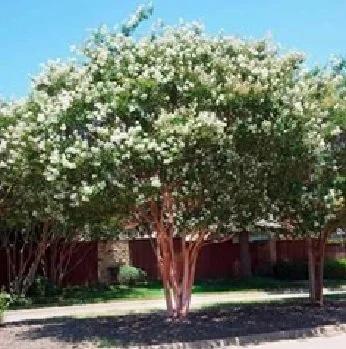
Crape myrtles (or crapemyrtles) are popular, low-maintenance flowering trees and shrubs known for their vibrant, long-lasting blooms, attractive exfoliating bark, and hardiness in warm climates. They are well-suited for the Tennessee climate, thriving in USDA Hardiness Zones 6-9.
Here are some recommendations
Proven Winners Center Stage Red Crape Myrtle
This variety is praised for its vibrant, cherry-ruby red flowers that bloom against unique, glossy black foliage from summer through fall.
Reviewers on Plant Addicts note it's a vigorous, low-maintenance shrub that is deer- and disease-resistant, making it a great choice for borders or containers.
It typically matures to 6-12 feet tall and 8 feet wide, fitting well in smaller spaces or narrow garden beds.
Pink & Purple Crape Myrtles
You can find pink and purple varieties, such as the Purple Crepe Myrtle (Muskogee) and Pink Crepe Myrtle plants
Top Varieties for Tennessee
Many excellent crape myrtle varieties are winter-hardy in Tennessee (Zones 6-9). These selections offer high resistance to common issues like powdery mildew and provide great seasonal interest.
Natchez White Crape Myrtle: Praised as "everyone's favorite" by The Crape Myrtle Company, this variety features pure white flowers and distinctive smooth, cinnamon-colored, exfoliating bark. It grows 20-30 feet tall.
Acoma: A smaller option, reaching 6-10 feet, known for its arching form, white flowers, and good resistance to mildew. Reviewers on Willow Ridge Garden Center mention its attractive bark.
Dynamite: True to its name, this variety produces vibrant, crimson-red flowers for up to four months. It is highly resistant to disease and drought once established and grows quickly, reaching 15-20 feet tall.
Tuscarora: A broad, vase-shaped tree with dark pink flowers that is highly resistant to mildew and features great orange-red fall foliage color. It typically grows 20-25 feet tall.
Care and Planting Tips
Crape myrtles are generally low-maintenance plants when given the right conditions.
Sunlight: They require full sun exposure to achieve maximum disease resistance, growth, and blooms.
Soil: Crape myrtles are adaptable to most soil types but thrive in well-drained soil. Avoid soggy conditions, as overwatering can reduce disease resistance.
Pruning: Many modern dwarf and semi-dwarf varieties have a tidy growth habit that rarely needs pruning. If you do prune, do so sparingly in the early spring.
Hardiness: Most varieties perform best in USDA Zones 7–9, but some cold-hardy options can survive in Zone 6.
-
Cryptomeria, primarily represented by the single species Cryptomeria japonica, is an iconic evergreen conifer in the cypress family (Cupressaceae). Commonly known as Japanese Cedar or Sugi, it is the national tree of Japan and is revered for its aromatic, rot-resistant timber and graceful ornamental form.
Key Characteristics
Appearance: Features a pyramidal or conical shape with soft, needle-like foliage that is spirally arranged. The reddish-brown bark exfoliates in long strips, adding ornamental interest.
Growth: In its native habitat, it can reach massive heights of over 150 feet, while cultivated garden varieties in the U.S. typically grow to 50–60 feet.
Seasonal Color: While generally bright green or bluish-green, many cultivars undergo a "bronzing" effect in winter, turning shades of bronze, burgundy, or rusty red.
Longevity: Some specimens in Japan, such as those on Yakushima Island, are estimated to be thousands of years old.
Popular Garden Cultivars
Because the wild species is quite large, most homeowners use specific cultivars selected for size and texture:
'Yoshino': A fast-growing, tall variety (30–40 ft) often used for privacy screens.
'Radicans': Similar to 'Yoshino' but noted for its resistance to leaf spot and extremely fast growth rate of 3–4 feet per year.
'Globosa Nana': A dwarf, dome-shaped shrub that grows only 3–4 feet tall, popular for rock gardens and small landscapes.
'Black Dragon': An intermediate-sized conifer with very dark green, dense foliage and a layered look.
'Sekkan Sugi': Features striking yellow-tipped foliage, providing a bright contrast in sunnier spots.
Cultivation and Care
Climate: Hardy in USDA Zones 5–9.
Soil: Prefers rich, moist, acidic, and well-drained soil; it does not tolerate drought well and should be protected from drying winter winds.
Light: Performs best in full sun to partial shade.
Maintenance: Generally low-maintenance and resistant to deer, though it can occasionally suffer from twig blight or bagworms if stressed.
Are you looking for a privacy screen or a dwarf ornamental varie
-
Cypress trees are a diverse group of coniferous plants in the family Cupressaceae, which includes true cypresses (Cupressus spp.), bald cypresses (Taxodium spp.), and false cypresses (Chamaecyparis spp.). They are primarily known for their evergreen, scale-like foliage (though bald cypresses are deciduous) and distinctive woody cones.
Common Cypress Tree Varieties
Italian Cypress (Cupressus sempervirens)
Features: This tree is famous for its very narrow, columnar form, often described as pencil-like. It is an evergreen with dense, dark green, aromatic, scale-like leaves and is a classic choice for formal gardens, driveways, and vertical accents.
Conditions: It is highly drought-tolerant and thrives in full sun and well-drained soil in USDA zones 7-10.
Leyland Cypress (Cupressus × leylandii)
Features: A natural hybrid known for its exceptionally fast growth rate of 3 to 5 feet per year, making it a top choice for quick privacy screens, hedges, and windbreaks. It has feathery, soft, blue-green to dark green foliage.
Conditions: It adapts to a wide range of soil types, tolerates salt spray in coastal areas, and grows well in USDA zones 6-10.
Bald Cypress (Taxodium distichum)
Features: Unlike most other cypresses, the bald cypress is a deciduous conifer, with soft, feathery needles that turn a striking copper or orange-brown color in the fall before shedding. Mature trees can develop massive, buttressed trunks and root outgrowths called "knees" in wet conditions.
Conditions: It thrives in wet, swampy areas and river valleys but is also adaptable to drier soil and urban landscapes. It is hardy in USDA zones 4-9.
Arizona Cypress (Hesperocyparis arizonica)
Features: This rugged, drought-tolerant evergreen is valued for its striking silvery-blue to blue-green foliage and peeling bark.
Conditions: It is well-suited for hot, dry climates (USDA zones 7-9) and is often used for windbreaks and xeric (low-water) gardens.
Monterey Cypress (Cupressus macrocarpa)
Features: Native to the California coast, this evergreen features dense, bright green, lemon-scented foliage and develops a broad, spreading crown.
Conditions: It is highly tolerant of wind and salt spray, making it an excellent choice for coastal plantings in zones 7-11.
Hinoki Cypress (Chamaecyparis obtusa)
Features: A type of false cypress, the hinoki cypress offers a variety of forms from dwarf and compact shrubs to larger trees, known for their unique, shell-like or fern-like foliage.
Conditions: They are popular ornamental plants for rock gardens, containers, and borders, with many cultivars available in various colors and textures.
-
View all
Daylilies (Hemerocallis) are hardy, easy-to-grow perennials known for their trumpet-shaped flowers, with each bloom lasting just a day but the plant producing many over weeks, typically flowering from spring to fall in a rainbow of colors. They thrive in full sun to partial shade, well-drained soil, and are versatile for borders, slopes, and containers, offering low maintenance and drought tolerance for gardeners. While not true lilies, they are popular for their vibrant colors and adaptability, with some varieties even reblooming multiple times.
When They Bloom
Season: Bloom generally from spring through summer into fall, depending on the variety.
Duration: Individual flowers last only a day, but the plant produces many over several weeks.
Rebloomers: Modern cultivars offer extended blooming with multiple flushes of flowers.
Sun: Prefer full sun (6+ hours) but tolerate partial shade, especially in hot climates.
Soil: Adaptable to most soils, but thrive in moist, well-drained soil with organic matter.
Watering: Drought-tolerant once established, but benefit from water during dry spells.
Fertilizing: Can benefit from fertilizer after the first bloom to encourage more flowers.
Maintenance: Low-maintenance; divide clumps in spring or fall to propagate.
Planting Time: Spring or fall are ideal, with fall planting allowing roots to establish before winter.
Planting Depth: Cover tubers (roots) with about 1 inch of soil.
Uses: Excellent for borders, mass plantings, rock gardens, slopes, and containers.
Not True Lilies: Hemerocallis is a different genus from true lilies (Lilium).
Toxicity: Daylilies are toxic to pets, especially cats, but not to humans.
Deer Resistance: Often damaged by deer, but otherwise very hardy.
-
Deutzia is a genus of approximately 60 species of deciduous flowering shrubs in the hydrangea family, primarily native to East Asia. These shrubs are highly valued in landscaping for their dense, cascading clouds of bell- or star-shaped flowers that bloom in mid-to-late spring.
Key Characteristics
Flowers: Prolific blooms in shades of white, pink, or lavender.
Habit: Most varieties feature an arching or mounded growth habit, ranging from 1-foot-tall groundcovers to 10-foot-tall upright shrubs.
Foliage: Simple, green leaves with serrated margins; some varieties like 'Nikko' or 'Yuki Cherry Blossom' offer striking burgundy or purplish-bronze fall color.
Maintenance: Generally low-maintenance, deer-resistant, and relatively pest-free.
Popular Varieties
Nikko (Slender Deutzia): A popular low-growing groundcover (1-2 ft tall) with pure white flowers and deep red fall foliage. Available at Home Depot.
Chardonnay Pearls®: Noted for its bright chartreuse (yellow-green) foliage and white pearl-like buds. Details at Proven Winners.
Yuki Cherry Blossom®: A dwarf variety (1-2 ft tall) featuring unique soft pink flowers, ideal for small containers or borders.
Fuzzy Deutzia (D. scabra): A larger, more upright species (6-10 ft tall) with rough-textured leaves and exfoliating bark for winter interest.
Care and Growing Tips
Light: Thrives in full sun for maximum flowering but can tolerate partial shade.
Soil: Prefers moist, well-drained, fertile soil.
Pruning: Crucially, Deutzia blooms on old wood. Pruning should be done immediately after flowering in late spring to avoid cutting off next year's buds.
Hardiness: Most common garden varieties are hardy in USDA Zones 5–8.
-
Distylium is a genus of hardy, low-maintenance evergreen shrubs native to Asia, prized for their disease and pest resistance and adaptability to a wide range of growing conditions.
Key Features and Growing Conditions
Evergreen Foliage: Distylium plants provide year-round interest with attractive, glossy leaves. New growth often emerges in shades of copper, bronze, maroon, or plum before maturing to various shades of green or blue-green, depending on the cultivar.
Flowers: They produce small, but unique, reddish-maroon flowers from late January through March, which appear along the stems and can attract pollinators.
Durability and Resilience: A significant advantage of Distylium hybrids is their toughness. They are resistant to deer, heat, drought, disease, and most pests.
Adaptability: Distylium is highly versatile, thriving in both full sun to part shade and tolerating various soil types, including both moist and dry soils once established (though well-drained soil is preferred).
Growth Habit: Available in a range of sizes and forms, from low, spreading groundcovers to upright, mounding shrubs.
Maintenance: They are low-maintenance plants, often requiring minimal pruning to maintain their shape.
Common Landscape Uses
Due to their versatility and resilience, Distylium shrubs are excellent alternatives for plants like boxwood, holly, and cherry laurel that are prone to disease or pest issues.
Hedges and Screens: Taller, upright varieties like 'Linebacker' or 'Emerald Heights' can be used to create privacy screens or formal hedges.
Foundation Plantings: Their compact, mounding habits make them a perfect fit for planting around foundations of buildings.
Groundcovers and Erosion Control: Low-growing, spreading cultivars like 'Vintage Jade' or 'Swing Low' are effective for mass plantings, stabilizing soil on slopes and embankments, or covering large areas.
Borders and Containers: Smaller varieties work well for defining borders along walkways, and many can be grown in containers on porches and patios.
Popular Cultivars
'Coppertone': Features coppery-red new foliage that matures to a cool blue-green. It has a compact, mounding habit, typically reaching 3 to 4 ft. tall and 4 to 5 ft. wide.
'Cast in Bronze': An upright, rounded variety with showy bronzey-maroon new growth that matures to a shiny dark green, making it a great medium-sized hedge or screen option.
'Vintage Jade': Forms a low, spreading mound with dark green foliage and arching branches. It grows to about 2 feet tall and spreads up to 5 feet wide, ideal for groundcover or low borders.
'Linebacker': One of the tallest hybrids, with an upright, barrel shape that is excellent for screens or hedges, growing 8-10 feet tall at maturity.
-
Dogwood trees are popular ornamental trees and shrubs, celebrated for their year-round visual interest including vibrant spring blossoms, lush summer foliage, dramatic fall colors, and distinctive winter bark or stems. There are many varieties available to purchase for your landscape.
Caring for a dogwood tree (Cornus) involves managing its specific light, water, and soil needs to prevent common diseases like anthracnose. As understory trees, they thrive in environments that mimic a woodland setting.
Optimal Growing Conditions
Sunlight: Most varieties prefer partial shade, specifically morning sun followed by afternoon shade. While they can tolerate full sun, it often stresses the tree, making it more susceptible to borers and leaf scorch.
Soil: They require well-drained, acidic soil (pH 5.2 to 6.0) rich in organic matter. They do not tolerate "wet feet" or standing water, which can lead to root rot.
Watering: Consistent moisture is critical, especially during the first two growing seasons.
New Trees: Water once or twice a week during summer and fall.
Established Trees: They need about one inch of water per week, provided by rain or deep soaking during dry spells.
Best Practice: Water at the base in the morning to keep foliage dry and reduce fungal risk.
Essential Maintenance
Mulching: Apply a 2–4 inch layer of organic mulch (like pine bark or wood chips) in a wide circle around the base. Keep the mulch a few inches away from the trunk to prevent rot and pest entry.
Pruning: Dogwoods require very little pruning. Only remove dead, diseased, or injured branches during the dormant season (late fall to late winter). Avoid pruning in spring as open cuts attract boring insects.
Fertilizing: Do not fertilize during the first year. For established trees, apply a slow-release, acid-forming fertilizer (like those for azaleas) in early spring. Avoid high-nitrogen fertilizers, which can reduce flowering.
Disease and Pest Prevention
Dogwood Borer: These larvae enter through wounds in the bark. Avoid hitting the trunk with lawn mowers or weed trimmers.
Anthracnose: A serious fungus causing leaf spots and dieback. Prevent it by ensuring good air circulation, raking fallen leaves in autumn, and selecting resistant cultivars like 'Appalachian Spring' or Kousa hybrids.
-
An elderberry is a fast-growing, multi-stemmed plant that can be grown as a large shrub or trained as a small tree, typically reaching 5 to 12 feet tall. They are primarily grown for their edible flowers and dark berries, which must be cooked before consumption.
Overview and Characteristics
The most common species in North America are the American elderberry (Sambucus canadensis) and the European elderberry (Sambucus nigra). Blue elderberry (Sambucus caerulea) is native to Western North America and can grow up to 20–30 feet tall, appearing more tree-like.
Size: Most varieties grow to be 6 to 12 feet tall and spread up to 10 feet wide, though some can reach 20 feet if left unpruned.
Foliage and Flowers: The plants have compound, serrated leaves and produce large, flat-topped clusters of fragrant white flowers in late spring to mid-summer.
Fruit: The flowers develop into small, dark purple to black berries from mid-August through September. The berries are tart and generally used for jams, syrups, and wine.
Toxicity: Leaves, stems, roots, and unripe berries contain cyanic glucosides and are toxic to humans and livestock. Ripe berries are also mildly toxic if eaten raw in large quantities, so they should always be cooked or dried before consumption.
Growing Conditions and Care
Elderberries are easy to grow if the right site is selected, as they are relatively low-maintenance once established.
Sun: They perform best in full sun (at least 6-8 hours of sunlight daily) for optimal fruit production, but they will tolerate partial shade.
Soil: Elderberries prefer consistently moist, well-drained soil that is rich in organic matter, with a slightly acidic pH (5.5 to 6.5). They can tolerate a wide range of soil types, including wet soil conditions, but not standing water.
Water: Plants need about 1 to 2 inches of water per week, especially during the first two growing seasons and dry periods. Mulching helps conserve soil moisture and suppress weeds.
Pollination: Most varieties are only partially self-fertile, so it is recommended to plant two or more different cultivars (e.g., 'Adams' and 'Johns' or 'Nova' and 'York') within 60 feet of each other to ensure good cross-pollination and a large harvest.
Pruning: Annual pruning in late winter or early spring is necessary to promote healthy new growth, on which the best fruit is produced. Remove all dead or damaged canes and thin out canes older than three years.
Recommended Cultivars
For fruit production, several American elderberry cultivars are popular choices.
'Adams': A widely grown, reliable cultivar known for high yields and disease resistance. It produces large clusters of berries and grows up to 8 feet tall.
'Johns': A very vigorous, upright cultivar that grows up to 10 feet tall, producing large berries that ripen slightly later than 'Adams'.
'Nova': Known for large, sweet fruit and excellent pest and disease resistance. It is a smaller bush and self-fertile, though a pollinizer is recommended for the best yield.
'York': Produces the largest berries among the common cultivars and is very productive. It grows 6-10 feet high and 6-8 feet wide.
'Black Lace' (ornamental): A European elderberry variety grown for its striking dark purple, lacy leaves and pink flowers, offering a dramatic ornamental appeal.
-
Elm trees are a genus of about 35 species of deciduous and semi-deciduous trees in the family Ulmaceae, primarily native to the North Temperate Zone. Historically prized for their majestic, arching vase-shaped canopies, elms were the most popular street trees in the 19th and early 20th centuries.
Identification Features
Leaves: Typically oval or egg-shaped with double-serrated (jagged) edges and an asymmetrical base where the leaf meets the stem.
Fruit: Distinctive circular or oval papery seed cases called samaras, which allow for wind dispersal.
Bark: Varies by species; many have deeply fissured gray-brown bark, while others like the Chinese (Lacebark) Elm feature mottled, exfoliating bark that reveals orange and green inner layers.
Flowers: Small, non-showy clusters that usually appear in late winter or early spring before the leaves emerge.
Major Species & Cultivars
American Elm (Ulmus americana): Famous for its "urn" or "vase" shape and massive size (up to 100 feet tall).
Slippery Elm (Ulmus rubra): Known for its mucilaginous inner bark, historically used for medicinal purposes.
Chinese Elm (Ulmus parvifolia): A popular landscape choice due to its high resistance to disease and attractive exfoliating bark.
Disease-Resistant Cultivars: Modern varieties like 'Princeton', 'Valley Forge', and 'Jefferson' have been developed to withstand the blight that killed millions of trees in the 20th century.
-
Euonymus shrubs are versatile plants, with both evergreen and deciduous varieties, prized for their foliage and adaptability in the landscape. They are popular for use as hedges, groundcovers, and accent plants.
As an avid gardener in Tennessee interested in a variety of shrubs and brands like Proven Winners, you might find specific varieties well-suited for your landscape needs.
Featured Euonymus Varieties
Here are some popular types of Euonymus shrubs that could work well in a Tennessee garden, including a few from the Proven Winners brand.
Proven Winners Fire Ball Seedless Burning Bush
This Proven Winners variety offers the sought-after brilliant crimson-red fall foliage of traditional burning bushes (Euonymus alatus) without producing seeds, making it non-invasive.
It maintains a manageable, mounded size of 5 to 7 feet tall and wide at maturity, ideal for hedges or as a specimen plant.
You might be interested in this product because of interest in a variety of trees and shrubs, and this offers dramatic seasonal color with low maintenance.
Proven Winners Gold Splash Wintercreeper Live Evergreen Shrub, Green and Yellow Foliage
This is a hardy, evergreen Proven Winners shrub known for its large, round, green leaves with bold yellow variegation that persists year-round.
It is a low-maintenance, disease-resistant, and drought-tolerant option, suitable for containers, mass plantings, or borders.
This item might appeal to you if you value aesthetic appeal, and this shrub provides vibrant, consistent color and texture.
Green Spire Euonymus - Monrovia 1 gallon
A well-behaved, upright evergreen variety with glossy green foliage, it naturally grows in a narrow habit, making it an excellent choice for a low-maintenance, formal hedge or screen in small spaces.
It is a deer-resistant option that is suitable for planting in full sun conditions.
Emerald 'N Gold Wintercreeper
This versatile evergreen plant features dark green leaves with golden-yellow margins that can develop pinkish hues during winter months, offering multi-season interest.
It can be used as a low hedge, a groundcover (rooting where stems touch the ground), or even a climbing plant if provided a structure.
General Care Tips
Sunlight & Soil: Most euonymus perform best in full sun to partial shade in well-drained soil. Variegated types show brighter color with more sun. Good drainage is essential to prevent root rot.
Watering: Water newly planted shrubs deeply and regularly during their first season. Once established, they are relatively drought-tolerant, requiring only moderate watering.
Pruning: Prune in late winter or early spring to shape the plant or remove dead/damaged branches.
Pests: The most serious pest concern is euonymus scale, which can be managed with horticultural oil sprays.
-
Ferns are ancient vascular plants known for their feathery foliage, reproducing via spores instead of flowers, thriving in moist, shady environments but with varieties for sun, and offering rich texture to gardens and homes, requiring well-draining soil and consistent moisture for best growth. Their care involves providing indirect light, ample water (especially in pots), and rich soil, while pests and diseases are generally minimal.
Growing Conditions & Habitat
Light: Most prefer partial shade or bright, indirect light; avoid harsh afternoon sun.
Soil: Well-draining, rich in organic matter, slightly acidic.
Water: Keep consistently moist, not soggy; containers dry faster and need more water.
Location: Woodlands, north/east sides of buildings, under trees, or indoors near bright windows.
Care Tips
Watering: Water when the topsoil feels slightly dry.
Fertilizing: Little needed; a spring mulch of compost helps.
Pruning: Trim old fronds in early spring for fresh growth.
Mulch: Mulch outdoors to retain moisture.
Varieties & Uses
Variety: From tiny groundcovers (Japanese Painted Fern) to tall, statuesque types (Cinnamon Fern).
Texture: Adds feathery texture, green abundance, and a woodland feel to landscapes.
Containers: Excellent for porches, patios, or as indoor plants.
Pests & Problems
Browning Fronds: Usually a sign of insufficient water or too much direct sun.
Pests: Generally few when outdoors; treat symptoms if they appear.
Reproduction & Types
Ferns have roots, stems, and leaves but reproduce with spores, not seeds or flowers.
They spread via spores or underground rhizomes, creating dense carpets.
-
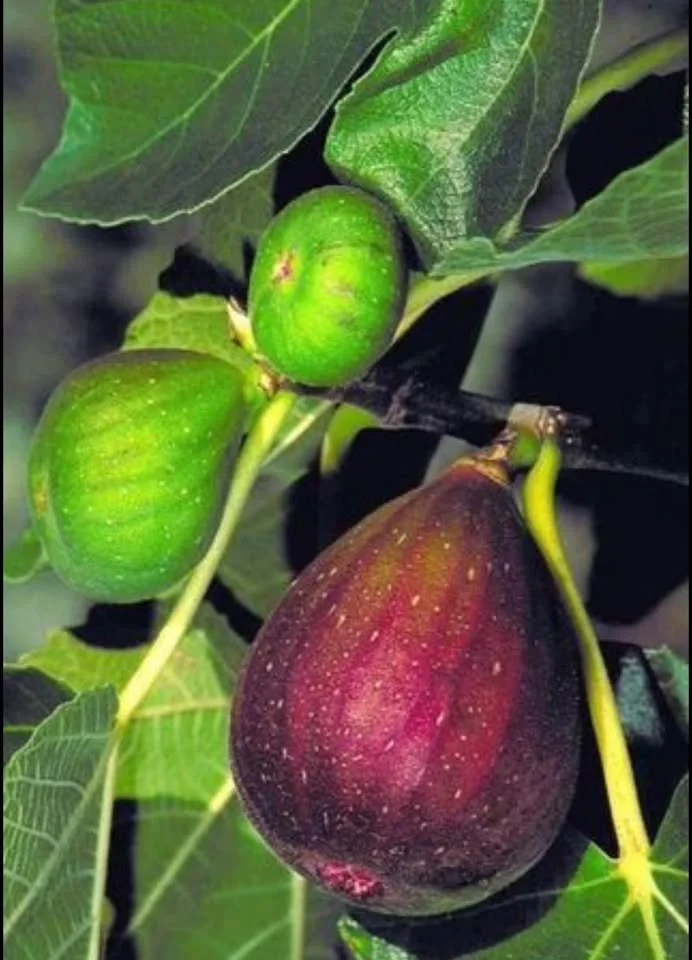
A fig tree (Ficus carica) is a deciduous fruit tree that is relatively easy to grow and produces sweet fruit perfect for fresh eating, drying, or preserves. They are well-suited for container gardening and can be grown in the ground in many climates with proper care.
For Your Garden: Cold-Hardy Tennessee Options
Based on your interest in various shrubs and trees, you may be interested in these fig varieties known to thrive in the Tennessee climate (USDA Hardiness Zones 6-10).
'Chicago Hardy' Fig Tree
This is potentially the most cold-tolerant variety, with above-ground portions hardy to around 10°F and roots hardy to much lower temperatures.
It produces medium-sized, purple-skinned fruit with reddish flesh and often yields as many as 100 pints of figs each season.
You might be interested in this product because your past searches for hardy plants suggest a need for durable varieties that can withstand local climate conditions.
'Celeste' Fig Tree
Also known as the "Sugar Fig" due to its very sweet flavor, this variety is compact and produces brown to purple fruit early in the season.
It is known for its heat tolerance and self-pollinating nature, making it a reliable choice for the Southeast.
'Brown Turkey' Fig Tree
This is one of the most common and reliable cultivars in the southeastern United States, producing a sweet, brownish-purple, medium-sized fruit with an amber flesh.
It typically produces two crops per year, one in early summer and a second in late summer months.
'Tennessee Mountain' Fig Tree
This exceptionally cold-hardy variety was discovered near Nashville, Tennessee, and has survived temperatures as low as -10°F.
It is self-pollinating and produces heavy crops of medium to large purple-black figs with a honey-like sweetness from July through September.
General Growing Tips
Fig trees generally thrive with full sun exposure and well-drained soil. They do not require a specialized wasp for pollination, as most common fig varieties are parthenocarpic (fruit develops without fertilization), meaning a single tree will produce fruit on its own.
Fig trees can be successfully grown in containers, which is beneficial for gardeners in colder zones who may need to bring the plants indoors during harsh winter weather. When grown in containers, they can be maintained at a manageable height of around 6 feet through pruning.
-
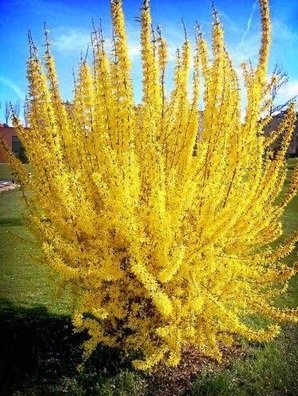
Forsythia is a hardy, fast-growing, perennial shrub known for its bright yellow flowers which are among the first to bloom in early spring, often before the leaves emerge. It is a versatile plant, often used for hedges, shrub borders, or as a seasonal privacy screen.
Key Characteristics
Appearance: Features a profusion of bell-shaped yellow flowers on graceful, arching branches in early spring. The leaves are simple, ovate, medium to dark green, and grow after the flowers have bloomed.
Size: Mature height and spread typically range from 8 to 10 feet, though some low-growing cultivars are available.
Growth Rate: Forsythia is a fast-growing shrub.
Hardiness: It is a hardy plant, generally suited for USDA zones 3b-8, and is adaptable to city conditions and air pollution.
Pests/Diseases: It has few serious insect or disease problems and is not typically favored by deer.
Growing Conditions
Sunlight: Blooms best in full sun (at least 6 hours of direct sunlight per day). In partial shade, plants will have fewer flowers and more straggly growth.
Soil: Adaptable to a wide range of soil types (sand, loam, clay), but prefers moist, well-drained soil and cannot tolerate wet sites.
Watering: Newly planted forsythias require regular watering for the first year or two. Established plants are drought-tolerant and only need supplemental irrigation during extreme dryness.
Pruning and Maintenance
When to Prune: The best time to prune is immediately after flowering in early spring. Pruning in late winter or any time from mid-summer onwards will remove next year's flower buds, reducing the spring bloom.
How to Prune: Focus on removing one-fourth to one-third of the oldest (largest) stems at ground level every other year to encourage new, vigorous growth and maintain the plant's natural fountain shape.
Rejuvenation: Overgrown, neglected shrubs can be cut back to within 4-6 inches of the ground in late winter or early spring. This sacrifices one year of blooms but rejuvenates the plant.
Fertilizer: Healthy, vigorous plants in a home landscape generally do not need fertilizer, however, when planting in new locations it is recommended to to make hole about twice the size of pot and fill in with Black Kow and soil conditioner mixed with soil.
-
Fothergilla, commonly known as Witch Alder, is a genus of deciduous shrubs native to the southeastern United States. Highly prized for multi-season interest, these plants offer fragrant, honey-scented spring blooms, attractive blue-green summer foliage, and some of the most vibrant fall colors in the landscape.
Key Characteristics
Flowers: Showy, creamy-white bottlebrush-shaped spikes appear in early spring, often before the leaves emerge. They are composed primarily of long, colorful filaments rather than petals.
Fall Foliage: One of the plant's strongest features, leaves turn brilliant shades of yellow, orange, red, and purple, frequently with multiple colors appearing on a single leaf.
Form: Most species have a rounded, mounded habit with picturesque zigzagging branches.
Popular Varieties
Dwarf Fothergilla (F. gardenii): A compact species typically reaching 2–3 feet in height. Ideal for small gardens and foundation plantings.
Mountain Fothergilla (F. major): A larger, more upright species that can reach 6–10 feet.
'Mount Airy': A widely available hybrid valued for its vigorous growth (5–6 feet tall), heavy flowering, and consistently excellent fall color.
'Legend of the Fall': Known specifically for having some of the most intense and reliable autumn foliage colors.
Growing Requirements
Light: Performs best in full sun to partial shade. Full sun is recommended to maximize flowering and fall color intensity.
Soil: Prefers rich, acidic, and well-drained soil with high organic matter. It is sensitive to alkaline soils, which may cause yellowing (chlorosis).
Moisture: Needs consistent moisture but does not tolerate standing water or saturated soil.
Hardiness: Generally hardy in USDA Zones 5–8 or 9, depending on the cultivar.
Maintenance: Low maintenance; pruning is rarely needed except to remove root suckers if you wish to prevent the plant from spreading into a colony.
-
A gardenia bush is a popular evergreen shrub known for its glossy dark green leaves and intensely fragrant, creamy white flowers, thriving in warm, humid climates (USDA Zones 7-11) with well-drained, acidic soil and partial to full sun, blooming intermittently from spring to fall, and requiring consistent moisture but not soggy roots, with common varieties like 'Frost Proof' and 'Mystery' offering beauty for hedges, containers, or landscapes
.
Sunlight: Full sun to partial shade (4-8 hours of sun).
Soil: Acidic (pH 5.5-6.5), well-drained, rich in organic matter.
Water: Keep consistently moist but not waterlogged; avoid letting roots sit in water.
Humidity: Prefers high humidity, especially indoors.
Fertilizer: Heavy feeders; regular fertilization is important, especially if leaves yellow (indicating iron deficiency).
Hardiness Zones: Best in USDA Zones 7-11; can be grown in containers in colder zones and brought indoors.
Planting: Plant in slightly mounded soil to ensure good drainage; mulch but keep mulch away from stems.
Pruning: Prune in late winter/early spring to shape and encourage new growth.
Pests: Watch for whiteflies; a strong spray of water can help.
Flowers: Creamy white, highly fragrant, bloom from spring to fall.
Foliage: Glossy, dark green, evergreen leaves.
Size: Varies by variety, from dwarf types to shrubs 3-8 feet tall.
-
Hawthorn (Crataegus spp.) a diverse genus of thorny, deciduous trees and shrubs known for their spring flowers, bright berries (haws), and adaptability to various soil conditions.
Hawthorn Varieties; here are some specific hawthorn varieties suited for Tennessee (USDA Zones 6-7)
'Winter King' Hawthorn (C. viridis)
This variety is widely available and known for its excellent disease resistance and nearly thornless branches on younger growth. You might be interested in this product because its disease resistance and low-maintenance nature are ideal for a serious gardener's landscape planning.
It grows to about 20 feet tall and features white flowers in spring, followed by abundant red fruits that persist into winter, providing multi-season interest.
'Crimson Cloud' English Hawthorn (C. laevigata)
This variety offers unique bright red flowers instead of the typical white or pink, and has good disease resistance with fewer thorns than other selections. You might be interested in this product because its distinct red blooms can serve as a focal point in a well-planned garden design, complementing the diverse array of flowering plants you appreciate.
Washington Hawthorn (C. phaenopyrum)
This type is a durable ornamental known for its vibrant orange, scarlet, and purple fall foliage and dense clusters of orange-red fruit that last into winter. You might be interested in this product because its strong seasonal color and wildlife benefits align with a professional gardener's desire for year-round landscape appeal and ecological function.
General Care and Cultivation Tips
Hawthorns are generally adaptable and resilient plants.
Sunlight: Hawthorns perform best in full sun (at least 6 hours of direct sunlight daily) for optimal flowering and fruit production. They can tolerate partial shade, but flowering will be less profuse.
Soil: They are adaptable to a wide range of well-drained soils, including clay and sandy loam, and tolerate both slightly acidic and alkaline pH levels. Avoid low spots where water stands.
Watering: Young trees require regular watering during their first growing season to establish a strong root system. Once established, mature hawthorns are relatively drought-tolerant, only needing additional water during prolonged dry spells.
Pruning: Pruning is best done in late winter or early spring during the dormant season. Focus on removing dead, diseased, or crossing branches to maintain a healthy structure. Caution: Always wear heavy gloves and protective gear due to the prominent thorns on most species.
Pests & Diseases: While generally low maintenance, be aware of potential issues like fire blight, rust, leaf spots, aphids, and leaf miners. Selecting disease-resistant varieties and ensuring good air circulation can help prevent problems.
-
Hemlock trees, belonging to the genus Tsuga, are graceful evergreen conifers known for their soft, feathery needles and drooping branches. Unlike the unrelated Poison Hemlock herb, hemlock trees are not poisonous.
Key Species
There are about 8 to 10 species worldwide, with four native to North America:
Eastern Hemlock (Tsuga canadensis): Also called Canadian Hemlock, it is the most common landscape species and the state tree of Pennsylvania. It typically grows 40–70 feet tall but can reach over 100 feet in the wild.
Western Hemlock (Tsuga heterophylla): A giant of the Pacific Northwest, capable of reaching 150–200 feet. It is the state tree of Washington.
Mountain Hemlock (Tsuga mertensiana): Found at higher elevations in the West, featuring blue-green needles that grow in a "bottlebrush" pattern around the twig.
Carolina Hemlock (Tsuga caroliniana): A rarer species native to the southern Appalachian Mountains.
Unique Characteristics
Shade Tolerance: Hemlocks are among the most shade-tolerant conifers, able to grow in as little as 5% sunlight.
Longevity: These trees are exceptionally long-lived; Eastern Hemlocks can live 800 years, while Western Hemlocks may exceed 1,000 years.
Identification: Look for short, flat needles with two white "racing stripes" on the underside and small, woody cones (about 0.5 to 1 inch long).
Ecological Role: Often called a "foundation species," they cool forest floors and streams, providing critical habitat for brook trout and deep-forest birds.
Current Threats
As of 2026, eastern species continue to face severe decline due to the Hemlock Woolly Adelgid (HWA), an invasive sap-sucking insect. Infestations appear as white, cottony masses at the base of needles and can kill a tree within 3–10 years. Conservation efforts include systemic insecticide treatments and the release of predatory beetles.
-
The holly tree (genus Ilex) is a group of over 570 species of evergreen and deciduous trees and shrubs, most famous for their glossy, spiny leaves and bright red winter berries. While primarily associated with Christmas decor, they are versatile landscape plants used for privacy screens, hedges, and wildlife habitats.
Popular Holly Varieties for 2026
Depending on your space and goals, different varieties offer unique growth habits:
American Holly (Ilex opaca): A native, slow-growing pyramidal tree reaching 15–30 feet in typical landscapes (up to 50+ feet in the wild). It features matte green leathery leaves and is highly resistant to pests.
Nellie Stevens Holly: A fast-growing hybrid (3 feet/year) that is excellent for quick privacy screens. It is "self-fertile," meaning it can produce berries without a nearby male pollinator.
Sky Pencil Holly: A narrow, columnar Japanese holly that grows naturally upward (up to 10 feet tall but only 2–3 feet wide). It is perfect for small spaces or framing entryways.
Winterberry Holly (Ilex verticillata): A deciduous shrub that drops its leaves in winter to reveal dense clusters of scarlet berries, providing high visual interest and bird food.
Essential Planting & Care
Sun & Soil: Most hollies thrive in full sun to partial shade (at least 4–6 hours of direct light) and prefer well-drained, slightly acidic soil.
Gender & Berries: Most hollies are dioecious, meaning they have separate male and female plants. To see red berries, you generally need a female plant and a compatible male pollinator within roughly 30–100 feet.
Watering: New trees require regular watering (about 1 inch per week) for the first year. Once established, most evergreen varieties are remarkably drought-tolerant.
Maintenance: Hollies require minimal pruning unless you are training them into a specific formal hedge or topiary. Aesthetic pruning is best done in late winter or early spring.
Safety & Wildlife
Toxicity: Holly berries and leaves are toxic to humans and pets if ingested, containing compounds like saponins that cause vomiting and diarrhea.
Wildlife: They are a vital winter food source for songbirds like cedar waxwings, robins, and mockingbirds, which eat the berries after they soften from winter frosts.
-
Deciduous hollies are a unique group of the Ilex genus that, unlike their well-known evergreen cousins, drop their leaves in autumn to reveal striking displays of bright red, orange, or yellow berries on bare branches. They are highly valued for providing vibrant "winter interest" in landscapes and as a critical food source for birds and mammals.
Primary Species
Possumhaw (Ilex decidua): A large shrub or small tree native to the southeastern U.S. It typically grows 7–15 feet in cultivation but can reach up to 30 feet. It is highly adaptable to both wet and dry soils and is often found in floodplains or along stream banks.
Winterberry (Ilex verticillata): A native North American shrub that thrives in wet, acidic soils, making it ideal for rain gardens or boggy areas. It is generally smaller and more multi-stemmed than Possumhaw.
Key Characteristics
Berries: Only female plants produce berries, which ripen in early autumn and often persist until mid-March or until consumed by wildlife. Popular cultivars include 'Warren's Red' (Possumhaw) and 'Winter Red' (Winterberry).
Pollination: These plants are dioecious, meaning separate male and female plants are required for berry production. One male plant can typically pollinate up to 10 female plants within a 50-foot radius.
Growing Conditions: They prefer full sun to part shade; while they can grow in shade, berry production is most prolific in full sun. Most are hardy to USDA Zone 5.
Maintenance: Generally low maintenance, though they may require occasional pruning in late winter or early spring to shape or manage suckering from the base.
Wildlife & Safety
Ecological Value: The berries are a vital winter food source for birds like cedar waxwings, bluebirds, and mockingbirds.
Toxicity: While beneficial for wildlife, the berries contain saponins and are toxic to humans and pets, causing nausea or vomiting if ingested.
-
The Thunderbolt Box Honeysuckle (Lonicera nitida 'Thunderbolt') is a compact, evergreen shrub known for its bright, chartreuse-green foliage that provides year-round color, making it a popular, low-maintenance alternative to boxwood for hedges, borders, and containers. This deer-resistant shrub thrives in full sun to partial shade, prefers well-drained soil, tolerates urban pollution, and is hardy in USDA Zones 5-9, offering versatility for both formal and informal landscapes.
Key Characteristics
Foliage: Fine-textured, glossy, chartreuse-green leaves that deepen to darker green in summer, with some yellow tones in fall/winter.
Size: Grows to about 3-4 feet tall and wide, with a dense, bushy habit.
Flowers/Fruit: Small, creamy white flowers in late spring; produces small, deep purple berries in late summer that attract wildlife.
Growth Habit: Medium growth rate, very adaptable, and drought-tolerant once established.
How to Grow & Care
Sunlight: Full sun to partial shade.
Water: Average to evenly moist, well-drained soil; avoid standing water.
Soil: Adaptable to most soil types, prefers alkaline but tolerates acidic.
Planting: Ideal for fall, spring, or summer planting; dig a hole twice as wide as the pot, loosen roots, backfill, and water well.
Maintenance: Low maintenance; can be left to cascade or pruned into formal shapes after the last frost.
Uses in the Landscape
Hedges & Borders: Excellent for creating low, formal hedges or edging pathways.
Containers: Works as a "thriller" in mixed containers or as a standalone specimen.
Foundation Plantings: Adds bright color and structure near homes.
Topiary: Can be shaped into various topiary forms.
-
Hostas, also called plantain lilies, are popular, low-maintenance, perennial plants grown primarily for their attractive foliage in shady garden areas. They come in a wide variety of sizes, colors, and textures, thriving in partial to full shade with moist, well-drained soil.
Key Characteristics
Foliage: Hosta leaves are the main ornamental feature, ranging in color from deep blue-green to chartreuse, gold, white, and various variegated patterns. Leaf shapes can be rounded, heart-shaped, or strap-like, with textures that are smooth, glossy, crinkled, or puckered.
Size: Varieties range from miniature plants just a few inches in height to giant cultivars that can grow over 3 feet tall and 6 feet wide.
Flowers: Hostas produce tall flower stalks (scapes) bearing bell-shaped flowers in white, lavender, or purple hues, with some varieties offering a fragrant bloom that attracts hummingbirds and bees.
Hardiness: They are hardy perennials in USDA zones 3 to 9 and require a period of cold dormancy for optimal performance.
Growing and Care Tips
Light: Most hostas do best in partial to full shade, preferably with morning sun and protection from the harsh afternoon sun which can scorch the leaves. Blue varieties need more shade to maintain their waxy coating and blue color, while gold/yellow varieties can tolerate more sun.
Soil: They prefer rich, well-drained soil with a slightly acidic to neutral pH (6.5-7.5). Amending the soil with organic matter like compost improves drainage and nutrient content.
Watering: Consistent moisture is key, especially during dry periods, with a general need for about one inch of water per week. Avoid overhead watering to reduce disease problems.
Maintenance:
Apply a slow-release fertilizer in early spring as new growth begins.
Add a layer of organic mulch to retain soil moisture and suppress weeds.
Remove spent flower stalks to redirect energy to foliage growth.
In the fall, clean up and remove all dead foliage after the first frost to deter pests like slugs and snails from overwintering.
Plants can be divided in early spring or late summer if they become overcrowded.
Popular Varieties
Hosta 'June': A popular medium-sized variety praised by experts for its blue-green margins and bright yellow-to-chartreuse center that changes with light exposure.
Hosta 'Sum and Substance': A giant variety known for its huge, glossy, chartreuse-gold leaves that are thick and more slug-resistant. It can tolerate some sun and looks impressive as a specimen plant.
Hosta 'Blue Angel': A very large, heart-shaped, blue-green hosta prized for its size and color, which is best maintained in shadier spots.
Hosta 'Patriot': Features striking dark green leaves with wide, crisp white margins, a classic choice for borders and mass plantings.
Hosta 'Guacamole': Noted for its shiny, chartreuse-gold leaves with dark green margins and large, fragrant white flowers in late summer.
-
A hydrangea bush is a popular flowering shrub known for large, showy blooms, with varieties like Bigleaf (color changes with soil pH), Oakleaf (oak-shaped leaves), Panicle (cone-shaped blooms, sun-tolerant), and Smooth (large white flowers) offering diverse colors, sizes, and textures for gardens. They prefer moist, well-drained soil, need morning sun, and benefit from mulch, thriving with consistent water but disliking "wet feet," with most types flowering on old wood, requiring post-bloom pruning.
Key Characteristics
Variety: Many types exist, from compact patio varieties (2-3 ft) to large shrubs (6+ ft).
Blooms: Come in blue, pink, white, green, and red, often changing color based on soil acidity (acidic = blue, alkaline = pink) for bigleaf types.
Foliage: Features lush green leaves, with oakleaf types having distinctive oak-shaped foliage and great fall color.
Sunlight: Most prefer morning sun and afternoon shade; panicle types tolerate more sun.
Soil: Rich, moist, well-drained soil amended with compost or aged manure is ideal.
Water: Needs consistent water, especially when establishing, but avoid waterlogged roots.
Mulch: A 2-3 inch layer of shredded bark mulch helps retain moisture and protect roots.
When: Prune after flowering (late summer/early fall) for types that bloom on old wood (like Bigleaf).
How: Remove dead or damaged branches anytime; minimal pruning is best for shape.
Best Time: Spring (after frost) or fall (before winter) to allow root establishment.
-
A hypericum bush, commonly known as St. John's Wort, is a versatile, hardy shrub prized for its bright yellow summer flowers, dense foliage, and often decorative berries that provide multi-season interest in gardens, attracting pollinators while tolerating various soils and sun conditions, making it great for borders, rain gardens, and rock gardens. These shrubs bloom on new wood, need pruning in early spring, and offer benefits like drought tolerance, rabbit/deer resistance, and host plant status for some butterflies.
Key Characteristics
Flowers: Bright yellow, often with many stamens, appearing in summer.
Foliage: Small, slender, often fine-textured leaves that can turn golden in fall.
Berries/Seed Capsules
: Some varieties produce colorful berries (red, orange) or persistent seed capsules in fall and winter, offering visual appeal and bird food
.
Habit: Bushy, mounded form, varying in size by species (e.g., 2-7 ft tall).
Growing Conditions & Care
Sun: Full sun to partial shade.
Soil: Adaptable to most well-drained soils, including clay, sand, and loams, but prefers moist conditions; drought tolerant once established.
Pruning: Prune in early spring to shape and encourage new growth, as they flower on new wood.
Water: Water deeply during the first year, then weekly; mulch helps retain moisture.
Uses in the Landscape
Mixed perennial borders
Rock gardens or rain gardens
Mass plantings or as hedges
Pollinator and native plant gardens
Popular Varieties
Bushy St. John's Wort (Hypericum densiflorum): For moist areas, native to Eastern U.S..
Shrubby St. John's Wort (Hypericum prolificum): Highly adaptable, great for difficult soils.
'Hidcote': Semi-evergreen with large, deep yellow flowers.
'Tricolor': Variegated foliage.
-
The Itea bush, commonly known as Virginia Sweetspire, is a versatile, native deciduous shrub prized for its fragrant white flower spikes in early summer and its brilliant fall foliage. It is widely used in landscaping as a "problem solver" because it thrives in both full sun and deep shade, and can tolerate wet, swampy soils that many other plants cannot.
Key Characteristics
Flowers: Fragrant, drooping white "bottlebrush" racemes that bloom for 4–6 weeks in May and June.
Foliage: Glossy dark green leaves in summer that turn vibrant shades of red, orange, and purple in autumn.
Size: Standard varieties grow 3–6 feet tall, while dwarf cultivars reach 2–3 feet.
Habit: Mounded with gracefully arching branches. It spreads slowly by root suckers, making it excellent for erosion control on slopes.
Growing Conditions
Hardiness: Thrives in USDA Zones 5–9.
Light: Highly adaptable. It survives in full shade but produces the best blooms and most intense fall color in full sun (at least 6 hours).
Soil: Prefers moist, slightly acidic, humus-rich soil, but is tolerant of clay, bogs, and even short periods of drought once established.
Popular Cultivars
'Henry's Garnet': Known for larger 6-inch flower spikes and rich reddish-purple fall color.
'Little Henry' (Sprich): A popular dwarf version (2–3' tall) ideal for smaller gardens or massing as a groundcover.
'Scentlandia': A compact variety (2–3' tall) bred specifically for a stronger fragrance and better cold tolerance in Zone 5.
'Fizzy Mizzy': Features unique upright flower spikes rather than drooping ones.
Care & Maintenance
Pruning: Generally requires little maintenance. If needed, prune immediately after flowering to avoid cutting off next year's buds, which form on old wood.
Watering: Keep soil consistently moist for the first year. For established plants, supplemental watering is only needed during prolonged dry spells.
Fertilizing: Apply a balanced slow-release fertilizer in early spring as new growth begins.
-
Ivy plants are typically vines or groundcovers.. They can, however, be pruned and managed to grow as a dense, low-growing ground cover, which may resemble a bush or hedge if maintained regularly.
Popular ivy types and how they can be used in your garden in Tennessee;
Recommended Ivy Varieties
Most common ivies are well-suited for the Tennessee climate (USDA Hardiness Zones 6-9, which covers Tennessee). You might be interested in these products for landscaping and evergreen options for your garden.
English Ivy (Hedera helix)
This is the most common and versatile ivy, often used for its classic, deep green, evergreen foliage.
It's a vigorous grower that can quickly cover walls, fences, or function as a dense ground cover.
Specific Cultivars: 'Baltica' and 'Thorndale' are known as some of the hardiest English ivy varieties, which is ideal for winter hardiness.
Boston Ivy (Parthenocissus tricuspidata)
Technically a different genus, this "ivy" is famous for its ability to climb walls and structures using suction-like discs.
Unlike English ivy, it is deciduous, offering vibrant orange-red fall colors before losing its leaves.
This is a great option if you are looking for seasonal interest in addition to coverage.
Persian Ivy (Hedera colchica)
This variety offers larger, glossier leaves than English ivy and is more cold-hardy than Algerian ivy.
It is a good choice for high-traffic locations like near paths or driveways.
Growing Ivy as a "Bush" or Ground Cover
To achieve a bushy, compact appearance with ivy, regular maintenance is key.
Pruning for Density: Regularly snip off the growing tips of the vines to encourage lateral branching, resulting in a fuller, bushier plant.
Controlling Spread: Ivy spreads quickly and can become invasive, so annual pruning is necessary to control its growth and prevent it from climbing unwanted structures or spreading into lawn areas.
Planting Conditions: Most ivies prefer partial to full shade, which makes them excellent for covering bare spots under trees where grass won't grow well. They thrive in well-drained, moist soil but are drought-tolerant once established.
Using hardy ivy varieties like 'Thorndale' or 'Baltica' as a low-maintenance, evergreen groundcover might be a perfect fit for your landscaping projects.
-
Japanese Maples (Acer palmatum) are prized ornamental trees from Asia, known for their delicate, hand-shaped (palmate) leaves, diverse forms (upright, weeping, dwarf), and stunning seasonal colors—vibrant reds, oranges, and yellows in fall—thriving in USDA Zones 5-9 with dappled shade and well-drained soil, offering year-round interest as focal points in gardens, often grown in containers or as small specimen trees.
Key Characteristics
Leaves: Palmate (hand-like) with 5-9 lobes; color varies from green to deep red, often changing dramatically in fall.
Size & Form: Varies greatly by cultivar, from small dwarf shrubs (3-6 ft) to small trees (10-25 ft), with upright, spreading, or cascading habits.
Flowers/Fruit: Small reddish flowers in spring followed by winged 'keys' (samaras) in fall.
Winter Interest: Unique branching structures and colorful bark (e.g., Coral Bark Maple) add appeal.
Growing Conditions
Sun: Partial shade or dappled sunlight is ideal; protect from intense afternoon sun and hot winds to prevent leaf scorch.
Soil: Prefers moist, well-drained, rich soil, but can tolerate clay if drainage is good.
Water: Needs consistent moisture, especially when young; avoid drought.
Hardiness: Generally USDA Zones 5-9.
Care & Maintenance
Pruning: Best done in winter to shape, remove dead/crossing branches; summer pruning can manage dense canopies.
Pests/Diseases: Relatively pest-resistant but watch for aphids (treat with water spray/neem oil) or mildew (use fungicide) in wet springs; leaf scorch from sun/wind/frost.
Popular Varieties
'Bloodgood': Upright, deep burgundy-red foliage.
'Coral Bark': Bright red bark for winter interest.
'Tamukeyama': Weeping form with deep red, lace-like leaves.
'Waterfall': Cascading form with feathery green leaves.
-
"Japonica" is a species epithet used in the botanical names of several distinct, popular bushes, including Pieris japonica (Japanese Andromeda), Chaenomeles speciosa (Flowering Quince), and Camellia japonica. These plants have very different characteristics and growing needs, so the best bush depends on your specific requirements.
Types of Japonica Bushes
Pieris japonica (Japanese Andromeda)
Description: This is a broadleaf evergreen shrub known for its beautiful, drooping clusters of urn-shaped flowers in early spring and attractive new foliage that emerges in bronze or red shades before maturing to glossy dark green.
Growing Conditions: It thrives in organically rich, well-drained, acidic soil in a spot with part to full shade, and should be sheltered from harsh winter winds. It's a popular choice for foundation plantings and shrub borders.
Popular Cultivars: 'Mountain Fire' (vivid red new growth, white flowers), 'Dorothy Wycoff' (dark red buds open to pink flowers), and 'Flaming Silver' (variegated leaves with a white margin) are popular options.
Chaenomeles speciosa (Flowering Quince)
Description: A deciduous shrub primarily grown for its showy, early spring flowers that bloom on bare branches. Unlike older varieties, many modern cultivars are thornless and heat-tolerant.
Growing Conditions: It is a very versatile and low-maintenance option that can tolerate a range of soil types (including clay) and prefers full sun to partial sun.
Popular Cultivars: The 'Double Take' series includes 'Scarlet' (true red double blooms), 'Orange', and 'Peach' varieties, known for their large, vibrant, double flowers.
Camellia japonica
Description: This is an evergreen shrub prized for its large, elegant flowers that bloom in late winter and early spring, offering color when few other plants are in bloom. The flowers can be solid or variegated (pink, red, white) and some are fragrant.
Growing Conditions: They prefer a location with part sun and moist, well-drained, acidic soil, and are suitable for USDA Hardiness Zones 7 through 9.
Popular Cultivars: 'Kramer's Supreme' and 'High Fragrance' are known for their strong scent, while 'Tricolor' features a mix of pink, red, and white blooms on a single plant.
Cleyera japonica (Japanese Cleyera)
Description: This broadleaf evergreen shrub is a southern favorite, often used for hedges or screens due to its dense growth habit. Its new growth has a bronze tint before maturing to a deep, lustrous green.
Growing Conditions: It is low maintenance, preferring full sun to part shade and well-drained soil. It is also drought-tolerant once established.
-
Jasmine plants, known for their fragrant flowers, are available in various types, including true jasmines and climbing vines, which can be grown in gardens or containers. Options suitable for Tennessee (USDA hardiness zones 6-10) include specific hardy varieties.
Popular Jasmine Varieties
'Madison' Star Jasmine
This is a cold-hardy variety of Star Jasmine, reliably hardy in zone 7 and possibly zone 6, making it suitable for many areas in Tennessee.
It produces fragrant, white, star-shaped flowers from late spring through summer and has glossy evergreen foliage.
It can be grown as a climbing vine or pruned into a compact shrub form.
Winter Jasmine (Jasminum nudiflorum)
This variety is very cold-tolerant, hardy down to zone 6, and is one of the best options for cooler climates.
It features bright yellow flowers that bloom in winter or early spring, adding color when other plants are dormant.
Note that its flowers, unlike most other jasmines, do not have a strong fragrance.
Asiatic Jasmine (Trachelospermum asiaticum)
This plant works well as a groundcover and can also be trained to climb structures like fences and arbors.
It is suitable for USDA zones 7-10 and is drought-resistant once established
Arabian Jasmine (Jasminum sambac)
Known for large, highly scented double flowers, this is a tropical shrub that may bloom nearly year-round in mild climates.
In colder regions like Tennessee, it can be grown in containers and wintered indoors to protect it from the cold.
General Care Tips
Sunlight: Most jasmines thrive in full sun to partial shade, generally requiring at least 6 hours of direct sunlight for the best flowering performance.
Soil: They prefer well-drained, moist, and fertile soil.
Watering: Water regularly, especially during the first year to establish a strong root system. Allow the top layer of soil to dry slightly between waterings.
Pruning: Prune after flowering to encourage new growth and maintain the desired shape.
Support: Vining types require a trellis, arbor, or fence to climb.
-
The juniper (genus Juniperus) is a versatile evergreen conifer with species that range from low-growing shrubs to tall trees, widely distributed across the Northern Hemisphere. They are prized in landscaping for their hardiness, drought tolerance, and year-round color.
Key Characteristics
Foliage: Junipers have evergreen leaves that can be either needle-like (common in juvenile plants and species like the Juniperus communis) or scale-like (common in mature plants of other species).
Cones/ "Berries": Instead of traditional berries, junipers produce fleshy, berry-like cones that are typically green when new and ripen to a bluish-black color. These cones are used for flavoring gin and some foods.
Bark: The bark is often thin, reddish-brown, and tends to peel off in vertical strips.
Hardiness: Junipers are highly adaptable and can grow in a wide range of challenging conditions, including dry, rocky, and well-drained soils. Once established, they are very drought-tolerant.
Forms: They exhibit diverse growth habits, from prostrate ground covers like the Blue Pacific juniper (Juniperus conferta 'Blue Pacific') to tall, narrow, columnar trees such as the 'Taylor' juniper (Juniperus virginiana 'Taylor').
Common Species and Cultivars
Common Juniper (Juniperus communis): This species has the most extensive range of any woody plant in the world and usually grows as a low, spreading shrub, though it can occasionally reach tree size.
Eastern Red Cedar (Juniperus virginiana): Native to the eastern United States, this tree can grow quite tall and is often used for privacy screens due to its dense, evergreen foliage.
Blue Point Juniper (Juniperus chinensis 'Blue Point'): A popular choice for landscaping, known for its dense, pyramidal shape and blue-green foliage that stays vibrant all year.
Creeping Juniper (Juniperus horizontalis): A ground-hugging species native to Canada and the northern US, excellent for ground cover and erosion control.
Uses
Culinary: The "berries" are a key ingredient in flavoring gin and are also used as a seasoning for cooked meats and sauces.
Landscaping: Due to their hardiness and variety of forms, junipers are used extensively as ornamental plants, in hedges, windbreaks, and for erosion control.
Wildlife: The cones are an important food source for many species of birds and small mammals.
Wood Products: The wood is durable and fragrant, sometimes used for small decorative or functional items like spoons and bowls, or for burning as incense. Larger species can be used as timber.
Juniperus virginiana 'Taylor' (Eastern Red Cedar)
This is a cultivar of the Eastern Red Cedar, which is native to Tennessee and tough and resilient.
It has an upright, columnar form, growing 25-30 feet tall but only 3-4 feet wide, making it excellent for privacy hedges in narrow spaces.
Proven Winners Aquavita™ Juniper
This tall, narrow shrub features aqua-blue foliage and is a Proven Winners
It is very low maintenance, deer resistant, and the berries attract birds in winter. It grows 10-15 feet tall and 3-4 feet wide, suitable for corners or as a screen.
Proven Winners Tortuga™ Juniper
A tough, low-mounding evergreen groundcover from the Proven Winners brand that is native to North America.
It is resistant to deer, rabbits, heat, and drought, and can tolerate salt near sidewalks or driveways. This plant is a great lawn replacement on a slope or used as a container "spiller".
Popular Juniper Varieties
Here are some other widely available juniper bushes that are popular for various landscaping needs.
Blue Rug Juniper
This variety is a popular, low-growing, mat-forming groundcover that reaches only a few inches in height but spreads widely (4-6 feet).
It features soft, silvery-blue foliage year-round that may turn a purplish tinge in winter. It is highly recommended for erosion control on slopes and in rock gardens due to its spreading, dense growth habit.
Sea Green Juniper
Known for its unique, arching, fountain-like branches that require no shaping to maintain their natural form.
The pleasant pine-scented foliage is a Kelly green that deepens to a darker forest-green in less sunlight or winter months. It is notably salt and wind tolerant.
Blue Point Juniper
This evergreen shrub has a dense, broad pyramidal form that maintains its shape with minimal pruning.
Its striking blue-green foliage makes it ideal for formal gardens, lawn specimens, or tall screens, as it can reach 6-15 feet in height.
-
A laurel bush is a popular, dense, broadleaf evergreen shrub known for its shiny dark leaves and use as a privacy hedge, with common types like English Laurel (Cherry Laurel, Prunus laurocerasus) producing fragrant white flowers and black berries, though all parts are poisonous. Mountain Laurel (Kalmia latifolia) is a related native with showy pink/white flowers, preferring acidic soil, while Bay Laurel (Laurus nobilis) provides culinary herbs
. They thrive with sun to partial shade and moist, well-drained soil, requiring pruning to maintain shape
.
Common Types of Laurel
English Laurel/Cherry Laurel (Prunus laurocerasus): Fast-growing, good for hedges, has almond-scented crushed leaves, and toxic fruit.
Mountain Laurel (Kalmia latifolia): Native to Eastern US, loves acidic soil, has unique clustered flowers, forms dense thickets.
Bay Laurel (Laurus nobilis): Source of bay leaves for cooking, also used for smoke flavoring.
Growing Conditions & Care
Sun: Full sun to partial shade, especially morning sun for Mountain Laurel.
Soil: Well-drained; avoid wet feet. Mountain Laurel needs acidic soil.
Water: Keep moist, especially when establishing.
Pruning: Late spring/early summer is ideal, using sharp tools to avoid ragged cuts.
Uses
Privacy Screens & Hedges: Dense foliage blocks views.
Windbreaks: Strong, dense growth blocks wind.
Wildlife: Berries and dense cover attract birds.
Culinary: Bay Laurel leaves are a popular herb.
-
Leucothoe is a genus of broadleaf evergreen shrubs known for their attractive, often colorful foliage and graceful, arching stems with fragrant white flowers. They are popular for use in shady garden spots and are native to North America and Asia.
Popular Varieties and Features
Several Leucothoe varieties are highly regarded for their unique characteristics and suitability for landscaping. You might be interested in these products because you have a deep interest in various flowering shrubs and landscaping plants, including specific brands like Proven Winners.
Proven Winners® Paisley Pup® Leucothoe
Foliage: This variety is particularly eye-catching, with new growth emerging in shades of pink, green, cream, white, bronze, and yellow for a year-round display.
Flowers: It produces fragrant, bell-shaped white flowers in late spring to early summer that attract pollinators like bees, butterflies, and hummingbirds.
Growing Conditions: It's a North American native, shade-tolerant, and deer-resistant, making it an easy-care option for borders, mass plantings, or containers.
Leafscape 'Little Flames' Leucothoe
Foliage: Bursts into spring with shiny, fire-engine red new leaves, which mature to shiny green in summer and turn a deeper burgundy-red in the fall.
Size: This is a compact, slow-growing option, reaching about 18 to 20 inches tall and 12 inches wide, ideal for small spaces or edging.
Maintenance: It is deer-resistant and thrives in zones 5-9, preferring regular watering to establish a strong root system.
Leucothoe 'Rainbow'
Foliage: A cultivar of a native species, this shrub is cherished for its highly variegated red, green, and white foliage that provides year-round color.
Growing Conditions: Naturally grows well in Tennessee (its native habitat includes the state), tolerating both shade and damp soil, making it a versatile choice for woodland gardens or planting under specimen trees.
Uses: Its natural vase shape can grow 3 to 5 feet high, making it a great option for hedges, though it can be trimmed to be more compact for containers.
General Care and Planting Tips
Light Requirements: Most Leucothoe varieties prefer part shade to full shade (4 or less hours of direct sun daily). Full sun or deep shade can sometimes negatively affect performance.
Soil Needs: They thrive in cool, organically rich, moist, well-drained loams with an acidic pH, similar to what rhododendrons and azaleas prefer.
Watering: Water deeply and regularly to establish the root system. Once established, they are somewhat drought-tolerant but do best with consistently moist soil. A thick layer of mulch helps keep the roots cool and moist.
Maintenance: These shrubs are generally low-maintenance and seldom require pruning. If needed, you can remove entire branches at the ground level.
Wildlife: They are notably deer-resistant and the flowers are a good nectar source for bees, butterflies, and hummingbirds.
Caution: The leaves are highly flammable and toxic if ingested.
-
Lifeberry plants, commonly known as Goji Berries (Lycium barbarum), are hardy, ornamental, and edible shrubs prized for their nutritious red berries, purple flowers, and adaptability to various conditions, growing as sprawling, multi-stemmed bushes that benefit from staking and require full sun and well-drained soil for best fruit production, providing antioxidant-rich fruit from late summer to fall.
Key Characteristics
Appearance: Small green leaves, purple flowers in summer, bright red berries.
Habit: Sprawling, flexible canes that can reach 6-10 feet tall, often needing support.
Fruit: Red, juicy, antioxidant-rich berries that sweeten as they mature; good fresh, dried, or in preserves.
Growth: Fast-growing, disease-resistant, and tolerant of urban pollution.
Growing Conditions & Care
Sun: Full sun to partial shade.
Soil: Adaptable to most well-drained soils, prefers neutral to slightly alkaline.
Water: Tolerates drought but thrives with regular watering for better fruit.
Support: Stake or trellis canes to keep fruit off the ground and manage growth.
Pruning: Minimal pruning needed; prune tips in late winter/early spring to encourage new fruiting wood.
Uses
Edible gardens and containers.
Ornamental accent or hedge.
Berries for fresh eating, smoothies, teas, cooking.
Sweet Lifeberry® Goji Berry
Planting & Growing. Sweet Lifeberry® Goji Berry will grow to be about 12 feet tall at maturity, with a spread of 7 feet.
All About Lifeberry® Goji berries (Lycium barbarum)
Water: The plants tolerate some drought once established, but for best fruit set and quality, water regularly. Soil: Goji berries ...
Proven Winners
Sweet Lifeberry® Goji Plant
In the spring, these pest- and disease-resistant plants develop showy purple flowers against gorgeous green foliage.
-
View all
A lilac bush is a popular, hardy, deciduous shrub known for its clusters of highly fragrant flowers in spring, typically in shades of purple, pink, white, and blue, making it great for hedges or specimen plantings. To grow, they need full sun and well-drained soil, blooming best after winter chill but requiring pruning right after flowering to encourage next year's blooms, and while they can sucker, modern varieties and renovation pruning help manage growth.
Growing & Care
Sunlight: Full sun (6+ hours) is essential for good blooms.
Soil: Prefers well-drained soil and is adaptable to various types, including slightly alkaline.
Watering: Water deeply after planting and keep soil moist.
Fertilizing: Feed in early spring and again after flowering with a balanced fertilizer (like 10-10-10).
Pruning: Prune immediately after they finish blooming (within 2 weeks) to remove spent flowers and shape the plant; this encourages buds for the following year.
Rejuvenation: For overgrown shrubs, cut one-third of the oldest canes to the ground each year over three years to refresh the plant.
Characteristics
Flowers: Abundant, sweet-smelling flowers in large panicles (clusters).
Colors: Common colors are lilac, purple, pink, white, and blue, with many cultivars available.
Size: Common varieties can reach 8-15 feet tall and wide, but dwarf types exist.
Wildlife: Attracts butterflies, provides food for caterpillars, and offers cover for birds.
Uses in the Garden
Hedges and screens
Foundation plantings
Specimen plants for fragrance
Group plantings for mass effect
Types
Common Lilac (Syringa vulgaris): The classic, often grown in older gardens, known for strong fragrance and suckering.
French Hybrids: Developed for more flowers and often less suckering.
Reblooming Lilacs (e.g., Bloomerang): Offer blooms in spring and again in summer.
-
Liriope, commonly known as lilyturf or monkey grass, is a genus of tough, grass-like perennials in the asparagus family (Asparagaceae). Native to East Asia, it is a staple in landscaping for 2026 due to its extreme durability and versatility as a groundcover or edging plant.
Key Varieties
There are two primary species used in home gardens, each with distinct growth habits:
Liriope muscari (Clumping): Grows in tidy, 12–18 inch wide mounds that expand slowly. It is best for formal borders or edging along walkways. Popular cultivars include 'Big Blue' (deep purple blooms) and 'Variegata' (creamy-yellow striped leaves).
Liriope spicata (Creeping): Spreads aggressively via underground rhizomes to form a dense mat. It is ideal for large-scale groundcover and erosion control on slopes but can become invasive in small garden beds.
Growing Conditions & Care
Liriope is "tough-as-nails" and adapts to most environments:
Light: Thrives in full sun to deep shade. It produces more flowers in sunny spots, while shade results in longer, darker leaves.
Soil: Prefers well-drained, acidic to neutral soil but tolerates clay and sandy conditions. It does not tolerate "wet feet" (permanently soggy soil).
Hardiness: Generally hardy in USDA Zones 5–10.
Maintenance:
Pruning: Mow or trim foliage back to 2–3 inches in late winter (February) to make room for fresh spring growth.
Division: If clumps become overcrowded, they can be easily divided with a shovel in early spring or fall.
Landscape Benefits
Resilience: It is notably deer-resistant, rabbit-resistant, and drought-tolerant once established.
Visual Interest: Offers evergreen foliage (in warmer climates), late-summer flower spikes (purple or white), and dark berries that persist into winter.
Pollinators: The blooms provide nectar for bees, butterflies, and hummingbirds.
-
Loropetalum, also known as Chinese fringe flower, is a popular evergreen shrub with vibrant foliage and fringed blooms, widely grown in the Southern United States in USDA hardiness zones 7-10. It is low-maintenance, deer-resistant, and can be used for hedges, borders, or container plantings.
Popular Loropetalum Varieties
Here are some options suitable for your Tennessee location (Zone 7):
Proven Winners 'Jazz Hands Pink' Loropetalum
This dwarf variety features cool purple foliage with a cranberry undercurrent and is topped with hot pink blooms in mid-spring.
It fits well in container gardens or mixed borders and requires minimal pruning.
Proven Winners 'Jazz Hands Variegated' Loropetalum
The first-ever variegated loropetalum, its new growth is splashed with pink and white, maturing to a rich purple.
It offers year-round interest and produces pink flowers. You might be interested in this plant for interest in unique and distinctive landscaping plants.
Southern Living Plant Collection 'Red Diamond' Loropetalum
This midsize, compact shrub boasts luscious, deep purple foliage all year long and bright fuchsia, tassel-like flowers in early spring, re-blooming periodically.
It's a standout variety in the Southern Living collection.
Southern Living Plant Collection 'Purple Pixie' Loropetalum
A dwarf weeping variety, it's great for use as an evergreen groundcover, with vibrant pink blooms and purple foliage. Goog groundcover option for sloped areas in your garden.
-
Magnolia varieties range from large Southern types to smaller Star Magnolias, thriving in well-drained, slightly acidic soil, full sun to partial shade, and need consistent water until established, with minimal pruning (after blooming) for best shape and flowers, protecting early bloomers from frost. Key varieties include cold-hardy 'Edith Bogue', colorful 'Black Tulip', and yellow 'Yellow Bird', all benefiting from mulch and space for their wide roots.
Popular Magnolia Varieties
Southern Magnolia (Magnolia grandiflora): Large, evergreen, known for big white flowers; 'Edith Bogue' is a cold-hardy selection for colder zones (like 5B).
Star Magnolia (Magnolia stellata): Smaller, compact, with fragrant white or pink flowers.
Saucer Magnolia (Magnolia x soulangeana): Common deciduous type with large pink, white, or purple flowers, often blooming early.
'Black Tulip': Features deep burgundy-red flowers before the leaves.
'Yellow Bird': Produces bright yellow flowers as foliage emerges in spring.
Planting & Care Guide
Location: Full sun to partial shade (at least 6 hours sun) and sheltered from strong winds.
Soil: Well-drained, fertile, rich in organic matter, slightly acidic to neutral (pH 6.0-7.0). Avoid amending the planting hole; let roots spread into native soil.
Planting Time: Dormant (late fall/early spring) for deciduous types; early spring for evergreens. Plant so the root flare (where roots meet trunk) is at or slightly above ground level.
Watering: Keep consistently moist, especially for young trees; water deeply during dry spells.
Mulch: Apply organic mulch around the base to retain moisture, regulate temperature, and suppress weeds.
Fertilizing: Usually not needed if healthy. Use a slow-release, acid-forming fertilizer in spring if growth is poor or leaves yellow.
Pruning: Minimal; prune lightly after flowering to shape or remove dead/crossed branches. Pruning too late or hard can reduce next year's blooms, note The RHS and Garden Design.
Pests/Problems: Generally pest-resistant. Protect early bloomers from late frosts; yellow leaves may signal alkaline soil.
-
The Mahonia plant is a genus of evergreen, woody shrubs known for their distinctive spiny, holly-like leaves, fragrant yellow flowers (which bloom in late winter or early spring), and ornamental blue-black or red berries. They are a popular, low-maintenance choice for shady areas in a garden.
Popular Varieties
There are dozens of Mahonia species, but here are a few well-regarded ones:
'Soft Caress' (Mahonia eurybracteata 'Soft Caress' PP20183): A standout variety for its spine-free, feathery, bamboo-like foliage, a big departure from the traditional prickly leaves. It's a compact, versatile choice for containers or borders and features bright yellow blooms in early winter.
'Marvel' (Mahonia x media 'Marvel' PP27425): This statuesque, upright shrub has large, deep green, frond-like leaves and fragrant yellow flowers in late fall/early winter. It reaches a modest 6' in height and width at maturity and is highly resistant to pests and diseases.
'Winter Sun' (Mahonia x media 'Winter Sun'): This variety is noted for its beautiful, golden-crown of tightly packed, vertical flower spikes that bloom concentratedly in winter. It can grow quite tall, reaching up to 3m (around 10 feet).
Mahonia aquifolium 'Apollo': A smaller, bushier type with clusters of yellow flowers followed by blue-black berries. It is a versatile, award-winning plant, generally growing to about 1m (around 3 feet) high.
Growing and Care
Mahonia plants are generally low-maintenance and resistant to deer and most pests.
Light: They thrive in partial to full shade. While some species can tolerate full sun in cooler climates, they generally prefer filtered light during the hottest part of the day.
Soil: Mahonias prefer well-drained, rich soil with organic matter. They can tolerate various soil types (sandy, loamy, clay) and pH levels, but avoid continuously wet or overly alkaline conditions.
Watering: Water regularly during the first growing season to establish an extensive root system. Once established, they are quite drought-tolerant and usually only need watering during hot, dry spells.
Pruning: Prune lightly in late spring or after flowering to remove dead or damaged branches and maintain a tidy appearance.
Fertilizing: An annual application of a slow-release, balanced fertilizer in early spring is sufficient to encourage healthy growth and blooming.
-
Maple trees belong to the genus Acer, with approximately 132 species worldwide, including 13 native to North America. They range from massive shade trees to small ornamental specimens, each known for their distinctive lobed leaves and winged "helicopter" seeds (samaras).
Major North American Species
Sugar Maple (Acer saccharum): The primary source of maple syrup, famous for its brilliant five-lobed leaves that turn vibrant yellow, orange, and red.
Red Maple (Acer rubrum): The most common species in eastern North America, noted for red flowers in spring and fiery red foliage in fall.
Silver Maple (Acer saccharinum): A fast-growing tree with shaggy bark and leaves that have silvery undersides.
Bigleaf Maple (Acer macrophyllum): Native to the Pacific Northwest, these giants can reach 150 feet and have massive, deeply lobed leaves.
Ornamental & Small Varieties
Paperbark Maple (Acer griseum): A small understory tree valued for its cinnamon-colored, peeling bark and scarlet fall color.
Amur Maple (Acer ginnala): Often used as a shrub or privacy screen, though it is considered invasive in some U.S. regions.
Common Hybrid Varieties
Autumn Blaze Maple: A hybrid of the Red and Silver maple, it combines the fast growth of the Silver with the intense red fall color of the Red maple.
Red Sunset Maple: A cultivar known for turning red earlier than other varieties and having strong branch structures.
-
A mock orange (Philadelphus spp.) is typically a deciduous, multi-stemmed shrub known for its abundant, fragrant white flowers that smell like orange blossoms. While commonly referred to as a "tree," it generally grows as a large shrub, typically 2 to 14 feet tall depending on the variety.
About the Mock Orange Shrub
Mock orange is a popular choice for its fragrant blooms in late spring to early summer.
Appearance: Plants feature arching branches covered in white, four-petaled flowers, which can be single or double depending on the cultivar. The foliage is typically green and deciduous, sometimes offering yellow fall color.
Growing Conditions: Most varieties prefer full sun to partial shade and moist, well-drained soil, though they are adaptable to a range of soil types including clay, as long as drainage is adequate. They are also often drought-tolerant once established.
Usage: Due to their size and shape, mock oranges are often used as specimen plants, in groupings for borders, or as fragrant hedges. They are also attractive to bees and butterflies.
Proven Winners Illuminati Sparks™ Mock Orange
Features: This variety offers unique, glossy green foliage speckled with golden variegation, providing season-long interest. It has fragrant white flowers in early summer and is disease and deer-resistant.
Size: Grows to a compact 3–4 feet tall and wide.
Proven Winners Illuminati Spice® Mock Orange
Features: This shrub has abundant clusters of large, sweetly fragrant white double flowers with a citrusy scent. It is also drought-tolerant and deer-resistant.
Size: A compact, upright grower.
General Care and Planting Tips
Mock oranges are relatively low-maintenance but benefit from occasional pruning to stay healthy and full.
Pruning: Since they bloom on old wood, any shaping should be done immediately after flowering to avoid cutting off the next season's buds. It is beneficial to occasionally cut about a quarter of the oldest branches to the ground to rejuvenate the plant.
Watering: While drought-tolerant once established, supplemental water can help the plant thrive and flower more vigorously.
Local Varieties: For those in Middle and East Tennessee, the native Philadelphus hirsutus (Hairy Mock-orange) is a locally adapted option. This deciduous shrub spreads rapidly by root suckers and has fragrant flowers.
-
Mondo grass (Ophiopogon japonicus) is a versatile, low-maintenance evergreen groundcover ideal for borders, between stepping stones, or shaded areas. It is a lily-like plant, not a true grass, that is durable and adaptable in the Tennessee climate (zones 6-10).
Popular Varieties and Uses
Mondo grass is available in a few main varieties, each suited for specific landscaping goals.
Standard Mondo Grass (Ophiopogon japonicus)
This variety grows to about 10 inches tall.
It is a great choice for hiding tree roots or mass planting in larger landscapes.
It may require mowing about once a year to maintain a tidy appearance, unlike the dwarf variety.
Dwarf Mondo Grass (Ophiopogon japonicus 'Nanus')
Growing only 2 to 4 inches tall, this is an excellent no-mow option perfect for smaller projects like garden edging, container gardens, or filling spaces between stepping stones, as it can tolerate light foot traffic.
Reviewers often praise its dense, lush, evergreen foliage that forms a uniform, carpet-like appearance.
Black Mondo Grass (Ophiopogon planiscapus 'Nigrescens')
This variety is primarily grown for its unique, jet-black/deep purple foliage, which provides a striking contrast against green or variegated plants in the garden.
It reaches 5 to 6 inches in height and produces small lavender or pinkish-white flowers in the summer, followed by glossy blue-black berries.
You might be interested in this product for interest in a variety of unique plants and landscaping options, and this offers a dramatic color contrast.
Care and Planting Tips
Mondo grass is relatively easy to care for once established.
Light Requirements: Plants thrive in filtered sun to full shade. In hotter summer regions like parts of Tennessee, shelter from harsh afternoon sun to avoid leaf discoloration.
Soil and Water: Provide enriched, moist, well-drained soil. While establishing, water deeply and regularly (once per week without rain) to encourage a strong root system. Once established, it is fairly drought-tolerant, but avoid constantly soggy conditions, which can lead to root rot.
Maintenance: Trim back any dead or ragged leaves annually in early spring to make way for new growth. The plant rarely needs heavy feeding, but a slow-release granular fertilizer can be applied in spring and fall if desired.
-
Nandina domestica, commonly known as Heavenly Bamboo or Sacred Bamboo, is a versatile evergreen shrub widely used in landscaping for its vibrant foliage and distinctive berries. Despite its common names, it is not a true bamboo but a member of the Barberry family.
Key Characteristics & Growing Conditions
Foliage & Color: Leaves are fine-textured and change color seasonally, often emerging as bronze or red, turning green in summer, and shifting to brilliant scarlet or burgundy in winter.
Size: Standard varieties grow 4–8 feet tall, while dwarf cultivars like 'Firepower' remain under 2 feet.
Growing Zones: Hardy in USDA Zones 6–10.
Sun/Soil: Thrives in everything from full sun to deep shade and prefers well-drained soil with added organic matter.
Low Maintenance: Highly drought-tolerant once established and generally resistant to pests and deer.
Popular Cultivars
Modern selections are often bred for compact growth and specific leaf colors:
Obsession: Stays compact (3–4 ft) and features bright red young foliage that matures to blue-green.
Lemon Lime: Offers a refreshing chartreuse to lime-green color year-round and typically does not produce berries.
Firepower: A dwarf variety known for its intense red winter color and lack of invasive berries.
Blush Pink: Features unique pink-blushed new growth and remains compact for low hedges.
Environmental & Safety Concerns
While popular, Nandina domestica presents significant ecological and safety risks:
Invasiveness: In the southeastern United States, it is considered an invasive species because it spreads via underground rhizomes and bird-dispersed seeds, outcompeting native plants.
Toxicity: All parts of the plant, especially the red berries, contain cyanogenic glycosides. These are highly toxic to birds (notably Cedar Waxwings), as well as cats, dogs, and livestock if ingested in quantity.
Ecological Impact: To prevent spread and bird poisoning, experts recommend using sterile (berry-free) cultivars or pruning off flower and berry clusters.
-
Ninebarks (Physocarpus opulifolius) are hardy, low-maintenance deciduous shrubs native to North America, popular in landscaping for their showy flowers, colorful foliage, and unique peeling bark that provides winter interest. They are easy to grow and tolerate a wide range of soil and light conditions.
Popular Varieties
Ninebark cultivars offer a range of colors and sizes, making them versatile for various garden designs, from compact foundation plantings to tall privacy hedges.
'Diabolo' (or 'Monlo')
A classic, large variety known for its deep purple, almost black foliage that holds its color well throughout the season.
It produces clusters of small pinkish-white flowers in late spring.
'Summer Wine'
Features wine-red to purple foliage and an upright habit with cascading branches.
Offers good disease resistance and blooms with contrasting soft pink to white flowers.
'Little Devil'
A dwarf, compact variety, ideal for smaller spaces, rock gardens, or borders.
Known for its deep reddish-purple leaves and low maintenance needs, rarely requiring pruning.
'Amber Jubilee'
Distinguished by its chameleon-like foliage, with new leaves emerging in shades of orange, gold, and red, transitioning to green in summer, and rich purple in the fall.
'Tiny Wine'
A compact shrub with dense, dark bronze-maroon foliage and an upright, tidy form.
Its small, refined leaves and white flowers in late spring provide excellent season-long color contrast.
'Coppertina'
Notable for its copper-colored new growth in spring, which matures to a rich burgundy as the season progresses.
According to Nature Hills, it grows to be an attractive mid-sized shrub, fitting well in mixed borders.
Care and Maintenance
Ninebarks are valued for their toughness and adaptability, making them an excellent choice for low-maintenance landscaping.
Sunlight: They perform best in full sun (at least 6 hours per day) for optimal foliage color and flower production, but they tolerate partial shade. In very hot climates, some afternoon shade can be beneficial.
Soil: They are adaptable to a wide range of soil conditions, including clay and rocky soils, but prefer well-drained soil.
Watering: Once established, ninebarks are drought-tolerant and only require water during extended dry periods.
Pruning: Prune immediately after flowering in late spring or early summer to shape the plant. For rejuvenation, you can cut some of the oldest stems back to the ground every few years to encourage new, vigorous growth.
Pests/Diseases: They are generally pest- and disease-resistant, and are considered deer- and rabbit-resistant. Powdery mildew can occur in humid conditions, so ensure good air circulation.
-
Oak trees (genus Quercus) are iconic, long-lived hardwoods in the beech family (Fagaceae). There are approximately 450 to 600 species worldwide, with about 90 native to North America. They are renowned as "keystone species" because they support more life forms—including over 1,000 types of caterpillars and various birds and mammals—than any other North American tree genus.
Core Identification Features
Most oaks can be categorized into two primary groups based on their leaves and fruit:
White Oak Group: Characterized by leaves with rounded lobes and acorns that mature in a single season. Common species include the White Oak (Q. alba) and Bur Oak (Q. macrocarpa).
Red Oak Group: Characterized by leaves with pointed, bristle-tipped lobes and acorns that take two years to mature. Common species include the Northern Red Oak (Q. rubra) and Pin Oak (Q. palustris).
Fruit: All true oaks produce acorns, which are nuts held in a scaly, cup-like structure.
Landscape & Ecological Benefits
Oaks are highly valued for their durability and environmental impact:
Longevity: Many species live for hundreds of years. The Angel Oak in South Carolina is estimated to be 400–500 years old.
Climate Services: They excel at carbon sequestration; for example, a Northern Red Oak can absorb up to 20,000 pounds of CO2 over 20 years.
Urban Utility: Varieties like the Shumard Oak and White Oak are popular shade trees that tolerate pollution and varying soil types.
Maintenance and Risks
Care: While slow to moderate in growth (1–3 feet per year), oaks are generally low-maintenance once established. They prefer full sun and well-draining, slightly acidic soil.
Diseases: Oak wilt and root rot are significant concerns. Recently, the Goldspotted Oak Borer has been reported as a major threat to Southern California's oak populations as of early 2026.
-
Many ornamental grasses are suitable for zone 7, offering a variety of colors, sizes, and textures to enhance your garden or landscape. Popular options include fountain grass, switchgrass, and bluestem varieties.
Proven Winners Options
Prairie Winds 'Desert Plains' Fountain Grass
This fountain grass variety features bottlebrush-shaped flowers that emerge dusky purple and age to tan.
The foliage turns beautiful shades of red, orange, and gold in the fall.
It is deer-resistant, grows in an upright vase shape, and is suitable for borders, containers, or mass planting in zone 5-9 landscapes.
Proven Winners Graceful Grasses Blue Mohawk Soft Rush Perennial Live Plant
This unique grass is praised for its upright bluish-green foliage and is versatile, working well in containers, the landscape, or even as a water plant near a pond edge.
It maintains its blue foliage from spring through fall and is hardy in zones 5-9.
Prairie Winds 'Lemon Squeeze' Fountain Grass
This plant offers a burst of color with its bold, chartreuse-green foliage that stands out in full sun.
It is drought and heat tolerant, deer resistant, and works well in borders or mass plantings.
Popular Low-Maintenance Grasses
Dwarf Fountain Grass 'Hameln'
This is a compact, round variety (growing up to 2 feet tall) known for its thick, dark green foliage and fuzzy, wheat-colored flower heads in summer that bloom two weeks earlier than other varieties.
The foliage turns golden yellow to bronze in the fall and is considered deer-resistant.
'Karl Foerster' Feather Reed Grass
A widely used and tough ornamental grass that grows with a tall, upright habit, reaching up to 6 feet tall with showy, feathery plumes.
It tolerates a range of soil conditions and provides year-round architectural interest.
Little Bluestem (Schizachyrium scoparium)
A native grass known for its silvery blue-green leaves in summer that transform into striking hues of orange, red, and purple in the fall.
It typically grows 1.5 to 3 feet tall, prefers dry soil, and is beneficial for birds and insects while resisting deer.
Other Great Zone 7 Ornamental Grasses
Blue Fescue (Festuca glauca)
A short, clump-forming grass with fine-textured, powdery blue blades.
Cultivars like 'Elijah Blue' are drought tolerant and excellent for use as a groundcover or along walkways.
Switchgrass (Panicum virgatum)
A large native grass that can reach 3 to 6 feet tall, valued for its adaptability to various soils (including clay or sandy soils) and good erosion control properties.
'Shenandoah' is a popular cultivar known for turning red in the fall.
Japanese Forest Grass (Hakonechloa macra)
This plant is ideal for shaded gardens, forming a graceful, mounding shape with cascading foliage.
Varieties like 'All Gold' or 'Aureola' provide bright color in darker areas of the landscape.
-
You can successfully grow many pear varieties in USDA Zone 7, including European types like 'Moonglow' and Asian types such as 'Korean Giant', but choose fire blight-resistant cultivars like 'Harrow Delight' or 'Shenandoah' for best results in the South, planting them dormant in early spring and ensuring you have two different varieties for pollination to get fruit, which can take 3-7 years to establish.
Recommended Varieties for Zone 7
European Pears: 'Harrow Sweet', 'Harrow Delight', 'Moonglow', 'Potomac', 'Shenandoah'.
Asian Pears: 'Korean Giant', 'Shinko', 'Turnbull' (often need slightly less chill).
For Cold Hardiness (Zone 7 & colder): 'Summercrisp' (Dwarf) is noted for its cold tolerance.
Key Growing Tips for Zone 7
Planting Time: Plant bare-root trees in early spring after the ground thaws to prevent winter damage.
Pollination: Most pears are not self-fertile; plant at least two different varieties for fruit production.
Sunlight: Choose a location with full sun for maximum fruit production.
Pest & Disease: Select varieties resistant to fire blight, a common pear disease, and be aware of other pests like aphids or scale.
Patience: Expect fruit in 3 to 7 years after planting.
Things to Avoid
Bradford Pears (Callery Pear): These ornamental varieties are invasive and are now banned in some areas, so avoid planting them.
-
American Gold Rush Rudbeckia fulgida
Black Eye Susan Angelina Sedum
Black-Eyed SusanRudbeckia fulgida var. sullivantii 'Goldsturm'
Blue Marvel Salvia nemorosa PP #27,018
Bronze Beauty Ajuga
BURGUNDY GLOW AJUGA
Butterfly Rainbow Marcella Coneflower Echinacea 'Rain299" PP28573
Cajun Fire Heuchera PP24150
CARAMEL HEUCHERA PP16560
Cherry Red Salvia
CHEYENNE SPIRIT ECHINACEA
Citronelle Heuchera villosa Plant Patent #17,934
Copper King Heucherella
Cracked Ice Heucherella hybrid 'Cracked Ice' PP24690
CrazyBlue Russian Sage Perovskia atriplicifolia 'CrazyBlue' PP #25,639
Cupflower
Double Bubble Dianthus PP29972, Pretty Poppers
Drummonds Pink Creeping Phlox
Electric Plum Coral Bells Heuchera PP29924
Emerald Blue Phlox
Fire Alarm Coral Bells Heuchera Plant Patent #24,525
Fire Chief Heuchera x 'Fire Chief' PP #21,880
Fire Star Dianthus 'Devon Xera' PP #14,895
Firewitch Dianthus
FOREVER® Purple Heuchera PP26358 (‘TNHEUFP’)
Frosted Berry Coral Bells PPAF, PW Dolce
Frosty Fire Dianthus allwoodii
Georgia Peach Coral Bells Heuchera x 'Georgia Peach' Plant Patent #19,375
Goldilocks Coreopsis Li'l Bang Goldilocks Tickseed
Graceful Pink Gaura
Grape Expectations Heuchera x PP26894 Coral Bells
JUNIOR WALKER CATMINT Nepeta x faassenii Novanepjun Plant Patent #23,074
Kitten Around Nepeta faassenii Catmint PP30940
Lavender "phenomenal"
Lemon Ball Sedum
Lemon Love Heuchera
Li'l Bang Darling Clementine Coreopsis
Li'l Bang Daybreak Coreopsis hybrid 'Daybreak' PP #27,138
Lip Gloss Dianthus PP35073 SINGLE LADIES Series
Little Goldstar Black Eye Susan PP22397 Rudbeckia fulgida
Little Spire Perovoskia atriplicifolia Russian Sage
Mad Magenta Dianthus x Hybrida
May Night Salvia nemorosa
Moonbeam Coreopsis
Neon Star Dianthus Dianthus x 'Neon Star' PP #14,549
OBSIDIAN HEUCHERA pp14836, HYBRID CORAL BELLS
Opening Act Ultrapink Hybrid Phlox PP32093
Opening Act White Hybrid Phlox PP27461
Otto Quast Spanish Lavender Lavandula stoechas 'Otto Quast'
Palace Purple Heuchera Heuchera micrantha 'Palace Purple'
Penstemon 'Blackbeard' PP30052
Picture Purrfect Nepeta Catmint PP34502
Pink Profusion Salvia PP31435
Pink Twinkle Dianthus Mountain Frost x 'KonD1060K3' PPAF
Pinky Promise Dianthus PPAF
Plum Pudding Coral Bells Heuchera x
Pow Wow® White Echinacea purpurea PAS702918
PowWow® Wild Berry Coneflower Echinacea purpurea 'PAS702917'
Primavera Spanish Lavender Lavandula stoechas 'Anouk Deluxe 1225' PP #33,269
Prime Time' Russian Sage Perovskia atriplicifolia PP34304
Pumpkin Spice Heucherella PP29925
Purrsian Blue Catmint Nepeta 'Purrsian Blue' PP #24,788
Red Dragon Heuchera PPAF
ROSE MARVEL SALVIA Salvia nemorosa Rose Marvel
Ruby Star Echinacea purpurea 'Rubinstern'
Russian Sage Perovskia atriplicifoliaPPAF
Sensational! Lavender 'Tesseract" PP31786
SHASTA DAISY BETSY Leucanthemum hybrid PPAF
SHASTA DAISY Becky
Shasta Daisy 'White Cap' Leucanthemum x superbum
Shasta Daisy, Snowcap
Silver Gumdrop Coral Bells Heuchera PW Dolce PP29207
Six Hills Giant Catmint
Sombrero Baja Burgundy Coneflower Echinacea x 'Balsombabur' PP #28,162
Sombrero 'BALSOMENCO' Flamenco Orange Coneflower (Echinacea) PP25523
Sombrero Adobe Orange Echinacea hybrid 'Balsomador' USPP 26,639, Can PBRAF 5,636, US Utility 7,982,
Sombrero Blanco Echinacea hybrid USPP, US Utility 7,982,110
Sombrero Lemon Yellow Coneflower Echinacea 'Balsomemyim' PP30116
Sombrero Rosada Echinacea hybrid USPP, US Utility 7,982,110
Sombrero Tango Tangerine Coneflower Echinacea hybrida
Sombrero Tres Amigos Coneflower Echinacea hybrida
Sombrero® Balsomed Salsa Red Coneflower Echinacea x PP #23,105
SOUTHERN COMFORT HEUCHERA
Sugar Plum Coral Bells Heuchera x 'Sugar Plum' Plant Patent #21,857
Summer Snowdrift Iberis Candytuft
Summersong Firefinch ConeflowerEchinacea hybrid
SunSeekers Tequila Sunrise Echinacea
SunSeekers White Perfection Echinacea
SunSparkler Firecracker Sedum Sedum hybrid 'Firecracker' PP #26,595
Uptick Red Coreopsis "Baluptred" PPAF Tickseed
UpTick Gold & Bronze Coreopsis x 'Baluptgonz' PP #28,882
UpTick Yellow & Red Coreopsis
Visions Astilbe chinensis
Whoops-A-Daisy' Shasta Daisy
Wildberry Coral Bells Heuchera PP31222, PW Dolce
Woods Blue Aster
-
Pine trees are a diverse group of evergreen conifers (genus Pinus) known for their characteristic needle-like leaves in bundles (fascicles) and woody cones. They are important ecologically, economically, and culturally, providing timber, wildlife habitat, and ornamental value.
Key Characteristics
Pines are easily identifiable by several physical features:
Foliage: Pine trees have needles rather than broad leaves, which typically grow in bundles (fascicles) of two, three, or five, a key identification feature.
Cones: They are monoecious, meaning both male (pollen-producing) and female (seed-producing) cones grow on the same tree. The female cones are woody and, depending on the species, may open at maturity to release seeds or remain closed until triggered by an environmental cue like fire.
Bark: The bark of most pines is thick and scaly, but some species have thin, flaky bark, and the color can range from gray to reddish-brown.
Size and Lifespan: Pines vary significantly in size, from small shrubs to towering trees over 200 feet tall. They are also long-lived, with some species like the Great Basin bristlecone pine (Pinus longaeva) being among the world's oldest living organisms.
Habitat: They are predominantly found in the Northern Hemisphere and are adaptable to diverse environments, from cold boreal forests to deserts and coastal areas, provided the soil is well-drained.
Common Types of Pine Trees
With over 100 species, pines can be categorized by their needle count and growth habits.
Eastern White Pine (Pinus strobus):
Has five soft, blue-green needles per bundle.
It is a fast-growing, tall tree highly valued for timber and landscaping, though it is intolerant of air pollution and salt.
Ponderosa Pine (Pinus ponderosa):
Features three long needles per bundle and a distinctive vanilla-smelling, plated, orange-red bark on mature trees.
It is found in the western U.S. and is very drought-resistant, growing well in sandy or gravel soils.
Mugo Pine (Pinus mugo):
A smaller, slow-growing species with two needles per bundle, often used as a shrub in foundation plantings and rock gardens.
It is known for its hardiness and adaptability, tolerating tough, windy mountain conditions.
Loblolly Pine (Pinus taeda):
Common in the southeastern U.S., this fast-growing pine usually has three dark green needles per bundle.
It is particularly adaptable to a range of soil conditions, including wet clay soils, and is a major source of pulpwood and lumber.
-
Pyracantha (Firethorn) is a thorny, evergreen shrub known for its bright clusters of red, orange, or yellow berries and white spring flowers, used for hedging, espalier, and attracting birds, but its berries contain mildly toxic seeds (like apple seeds) requiring cooking for safe consumption. Popular for bonsai, it's hardy, sun-loving, and provides great seasonal color, but needs proper care, especially avoiding fire blight.
Key Characteristics:
Common Names: Firethorn, Pyracantha.
Appearance: Small, bright green leaves, white flowers in spring, and abundant berries (red, orange, yellow) from fall into winter.
Berries: Bitter raw, but edible when cooked into jams/jellies; seeds contain cyanogenic glycosides.
Uses: Hedging, wall-training, visual interest, bird food, bonsai.
Care: Loves sun, hardy (down to Zone 6), requires support if trained, prone to fire blight.
Interesting Facts:
Birds: A great food source for birds, especially thrushes.
Bonsai: A popular choice for bonsai due to its structure and berries, often kept outdoors year-round.
Toxicity: Berries are mildly toxic if eaten raw in large amounts; seeds are similar to apple seeds.
The 'Victory' pyracantha (Pyracantha koidzumii 'Victory'), also known as Victory Firethorn, is a fast-growing, thorny evergreen shrub prized for its abundant, bright red berries that persist through the winter. It is a versatile plant often used for hedges, privacy screens, or espaliers.
Key Characteristics
Size: Grows quickly to about 8-10 feet tall and 6-8 feet wide.
Foliage: Evergreen, with glossy, dark green leaves that may turn coppery-bronze in the fall.
Flowers: Showy clusters of small, creamy-white flowers appear in late spring.
Fruit: Large, spectacular clusters of bright red (or sometimes described as orange-red) berries in the fall and winter.
Thorns: Stems are thorny, making it an effective barrier plant for security or to deter deer.
Hardiness Zone: Typically hardy in USDA zones 6 or 7 through 9.
Growing Conditions & Care
Light: Prefers full sun (at least 6 hours of direct sunlight) for optimal flowering and berry production.
Soil: Adaptable to a variety of well-drained soils, including average or dry conditions. It has a preference for acidic soils and may show chlorosis (yellowing) in alkaline soils.
Water: Drought-tolerant once established, but requires regular, deep watering during its first growing season.
Pruning: Best pruned in late winter or early spring before new growth begins. Pruning in the summer will remove developing berries.
Wildlife: The berries attract birds, though they have low nutritional value and are extremely bitter to human taste.
Uses in the Landscape
Hedges and Screens: Its fast growth and dense, thorny nature make it an excellent, impenetrable privacy hedge or windbreak.
Espalier: Can be easily trained to grow flat against a wall or fence on a trellis.
Barrier Planting: The thorny branches are effective for security beneath windows or along property lines.
-
Pyracomeles (pronounced py-ra-ko-MEE-leez) is a unique, thornless evergreen shrub, a hybrid of Pyracantha (Firethorn) and Osteomeles, valued for its compact form, fine-textured foliage, and disease resistance, often used as a boxwood alternative for hedges, edging, or containers, with popular varieties like 'Juke Box' and 'Berry Box' offering year-round interest with white spring flowers and colorful fall/winter berries.
Key Characteristics & Uses
Parentage: A rare intergeneric cross between Pyracantha (Firethorn) and Osteomeles.
Appearance: Small, shiny green leaves, thornless branches, compact habit, offering texture similar to boxwood but better suited for warmer climates.
Flowers & Fruit: White, button-like flowers in spring, followed by small orange to red berries in fall and winter, attracting birds.
Growth: Hardy in USDA zones 7-9, heat-tolerant, disease-resistant, and drought-tolerant.
Uses: Excellent for low hedges, borders, edging, foundation plantings, containers, and groundcover.
Popular Varieties
'Juke Box': Thornless, fruitless, compact, excellent boxwood substitute, good for shaping.
'Berry Box': Features vibrant orange-red berries and is deer-resistant, offering great seasonal color.
Growing Conditions
Sun: Full sun to part shade.
Soil: Well-drained soil.
-
A quince tree is a small, hardy, ancient fruit tree related to apples and pears, known for its fragrant, golden fruit used in jams, jellies, and preserves, growing 10-15 feet tall with attractive spring flowers and yellow fall fruit, thriving in full sun and tolerant of wet soils. Quinces are generally low-maintenance, self-fertile, and pest-resistant, though they can produce hard, tart fruit not typically eaten fresh but excellent for cooking.
Characteristics
Size: Small trees, typically 10-20 feet tall.
Flowers: Large, showy white to pink blossoms in spring.
Foliage: Deep green, fuzzy on the undersides, turning yellow in fall.
Fruit: Large, fragrant, yellow when ripe in fall; high in pectin.
Uses: Jams, jellies, preserves, chutneys, sauces, and even meat dishes.
Growing Quince
Sun: Prefers full sun to half-day sun.
Soil: Tolerates wet soils better than most fruit trees, but moist, well-drained soil is ideal.
Hardiness: Hardy in USDA Zones 5-9 (some varieties even Zone 4).
Care: Low maintenance, adaptable, and usually pest-free.
Pollination: Often self-fertile.
Types of Quince
Common Quince (Cydonia oblonga): The fruit-bearing type, often multi-stemmed and gnarled.
Ornamental Quince (Chaenomeles species): Shrubs grown for flowers, producing hard, inedible fruit.
-
The redbud is a small, ornamental deciduous tree, native to North America, known for its dramatic display of rosy-pink, purple, or white flowers in early spring before the leaves emerge. It features distinctive heart-shaped leaves and a unique, often irregular, branching pattern, making it a popular choice for landscaping.
Key Characteristics
Size: The Eastern redbud (Cercis canadensis) typically grows to a height of 20–30 feet with a similar or slightly wider spread.
Flowers: Abundant, pea-like flowers bloom in clusters directly on the bare branches and even the trunk in early spring, a process called cauliflory. The buds are a deep red color before opening into lighter pink or purple blossoms.
Leaves: The leaves are large, simple, and heart-shaped, emerging as a reddish color, turning dark green in summer, and then a pale yellow in the fall.
Bark and Trunk: The tree typically has a short, often multi-trunked, twisted trunk with dark, smooth bark that becomes scaly with ridges as it matures.
Wildlife Value: The early blossoms provide a critical nectar source for pollinators, including bees and butterflies, while the seeds are eaten by birds like the Northern bobwhite and chickadees.
Planting and Care
Sun Exposure: Redbuds prefer a location with full sun to partial shade, with at least four hours of direct sunlight for the best flowering display. In hot climates, afternoon shade can help prevent leaf scorch.
Soil: They are adaptable to a wide range of soil types (acidic, neutral, alkaline, clay, loamy, sandy), but the soil must be moist and well-drained. They do not do well in consistently wet or poorly drained soils.
Planting: Because they develop a deep taproot and do not transplant well, it is best to plant them when young in their desired permanent location.
Watering: Water newly planted trees regularly during the first year to help establish strong roots. Once established, they are moderately drought-tolerant, but benefit from deep watering during prolonged dry spells.
Pruning: Pruning is generally only needed to remove dead, diseased, or crossing branches. The best time for shaping or structural pruning is immediately after flowering in early summer to avoid cutting off the next season's buds.
Potential Problems: The redbud is susceptible to certain diseases, particularly verticillium wilt and Botryosphaeria canker, which can shorten its lifespan. Keeping the tree vigorous through proper watering and pruning out dead branches helps prevent these issues.
Popular Cultivars
'Forest Pansy': Noted for its striking, deep purple foliage that turns bronze-green in the summer.
'Ruby Falls': A compact, weeping form with pendulous branches and deep purple, heart-shaped leaves.
'Appalachian Red': Features brilliant magenta or hot pink flowers, a more intense color than the standard species.
'Hearts of Gold': Stands out with its bright golden-yellow leaves that transition to a lime-green color.
'Alley Cat': A unique variegated variety with leaves irregularly splotched with white.
-
In Zone 7, you can successfully grow both Dawn Redwoods (Metasequoia glyptostroboides) and Coast Redwoods (Sequoia sempervirens), though they require different care strategies to thrive.
1. Choosing Your Variety
Dawn Redwood (Best for Zone 7): Highly recommended for this zone because it is deciduous (drops needles in winter), making it extremely cold-hardy down to -30°F. It tolerates urban pollution and wet soils better than other varieties.
Coast Redwood: While hardy to Zone 7, it is an evergreen and more sensitive to extreme winter freezes. It thrives best in areas with higher humidity or coastal influence.
Giant Sequoia: Generally more difficult in Zone 7 due to a lack of tolerance for high summer humidity and heat.
2. Planting Requirements
Location: Choose a site with full sun (at least 6–8 hours daily). Ensure the tree is at least 15–20 feet away from structures to accommodate its massive, shallow root system.
Soil: They prefer acidic, well-drained, moist soil (pH 5.0–6.5). They can tolerate clay but benefit from compost amendments during planting.
Spacing: For specimen trees, space them at least 25 feet apart; for groves, 7–15 feet is acceptable.
3. Essential Care and Maintenance
Watering: Newly planted trees need deep watering at least twice a week. Established redwoods typically require 1 inch of water per week. In dry Zone 7 summers, they must not be allowed to dry out completely, as this can cause needle burn.
Mulching: Apply a 3–4 inch layer of mulch (like wood chips or leaf litter) around the base to retain moisture and protect the shallow roots from temperature extremes.
Pruning: Redwoods naturally maintain a pyramidal shape and rarely require pruning except to remove dead or diseased wood. Prune only during dormancy (late fall to early spring).
Fertilizing: Generally not required for mature trees. For young trees, use a balanced, slow-release fertilizer once a year in early spring.
4. Potential Challenges in Zone 7
Winter Protection: Young Coast Redwoods may need burlap wrapping during the first few winters to protect against hard frosts.
Summer Heat: In the hottest parts of Zone 7, provide afternoon shade for seedlings and ensure consistent irrigation to prevent heat stress.
-
For Zone 7, choose heat-tolerant Rhododendron varieties, plant in acidic, well-drained soil with morning sun/afternoon shade (especially important in hot summers), water consistently but allow drying between soakings, and apply acidic mulch to maintain cool, moist, shallow roots, which thrive in humus-rich soil and require minimal pruning.
Location: Morning sun, afternoon shade (especially vital in hot Zone 7 summers). North or east-facing spots are ideal.
Soil Prep: Needs acidic (pH 4.5-6.0), moist, well-drained, humus-rich soil. Amend heavy clay with compost or peat moss.
Planting Technique: Plant high—the top of the root ball should sit slightly above the soil line to prevent root rot, as they are shallow-rooted. Dig a wide, shallow hole.
Watering at Planting: Saturate the root ball, then water every 3 days for the first 30 days.
Watering: Water deeply during dry spells (every 2-3 weeks without rain). Allow soil to dry slightly between waterings to prevent root rot.
Mulch: Apply a 2-4 inch layer of organic mulch (like pine needles or bark) to keep roots cool and moist, keeping it away from the trunk.
Fertilizing: Use a balanced or acid-loving plant fertilizer in early spring and after flowering. Water it in well.
Pruning: Lightly prune after flowering to shape or remove dead/diseased wood; avoid heavy pruning.
Companions: Hollies, hydrangeas, astilbes, and coral bells are good companions.
Good Zone 7 Varieties
'Nova Zembla': Hardy (Zones 4-8), tolerates more sun, good for hedges.
'Purple Dragon' (Azalea): Zones 7-9, dark purple-red flowers.
PJM Hybrids: Hardy, adaptable to sun, but need consistent moisture.
-
Zone 7b is great for many roses, including heat-tolerant Knock Out® Shrub Roses, fragrant David Austin English Roses (like 'Lady of Shalott', 'Claire Austin'), classic Hybrid Teas ('Mr. Lincoln', 'Peace'), and tough climbers like 'Peggy Martin', offering continuous blooms and easy care in warmer, moderate climates. Look for disease-resistant, heat-loving types, with fall being an excellent time to plant for root establishment before summer.
Popular & Reliable Choices for Zone 7b
Knock Out® Roses: Extremely popular for their disease resistance, continuous blooming, and heat tolerance, available in various colors.
David Austin Roses: Many English Shrub Roses thrive, offering fragrance and old-world charm, such as 'The Poet's Wife', 'Roald Dahl', and climbing 'Claire Austin'.
Classic Hybrid Teas: 'Mr. Lincoln' (red), 'Peace' (yellow/white), and 'Bewitched' (pink) are reliable for traditional rose lovers.
Climbing Roses: 'Peggy Martin' is a resilient climber, while 'Eden Climber' offers beautiful pink blooms.
Floribundas: Varieties like 'Koko Loko' (color-changing) and 'Our Lady of Guadalupe' provide clusters of flowers.
Tips for Zone 7b Rose Growing
Planting Time: Fall (October) is ideal for planting, allowing roots to establish before the next summer's heat. Spring (Feb-March) also works well.
Mulch: Apply mulch (straw, fir boughs) around the base for winter protection and moisture retention.
Sunlight: Roses need plenty of sun, ideally 6+ hours.
Water & Feed: Consistent water and appropriate feeding (like using coffee grounds for nutrients) support healthy growth.
-
Smoke trees (Cotinus) thrive in East Tennessee, with the native American Smoketree (Cotinus obovatus) naturally found on dry, rocky limestone bluffs, offering stunning fall colors (yellows, oranges, reds) and unique, hazy pinkish-purple "smoke" from spent flowers, while popular cultivated varieties like 'Royal Purple' are widely planted for their showy foliage and low-maintenance needs in full sun and well-drained soil.
Native American Smoketree (Cotinus obovatus)
Habitat: Found in dry, rocky spots, limestone glades, and bluffs in the Southern US, including parts of Tennessee.
Appearance: Small tree (20-30 ft) with blue-green leaves turning brilliant fall colors (yellow, orange, red, purple).
"Smoke" Effect: Tiny flowers produce long, airy, pinkish-purple stalks that create a smoky look after blooming.
Care: Tolerates poor, well-drained soils; prefers full sun; doesn't like overly rich or wet conditions.
Cultivated Smoketree (Cotinus coggygria)
Varieties: Popular cultivars include 'Royal Purple' (dark purple foliage) and 'Golden Spirit' (gold leaves).
Uses: Common landscape shrub or small tree for multi-season interest.
Care: Needs full sun and very well-drained soil; avoid over-fertilizing and wet feet.
Growing Smoketrees in East Tennessee
Soil: They are tough and thrive in tough, well-drained, even infertile soils, making them great for challenging spots.
Sun: Full sun is best for good growth and color.
Watering: Once established, they are drought-tolerant and prefer lean, dry conditions over rich, wet soil.
Maintenance: Low-maintenance; avoid over-watering, over-fertilizing, and don't pamper them too much.
Both native and cultivated types provide excellent fall color and unique texture, perfect for adding interest to Tennessee landscapes.
For smoke trees (Cotinus) in Zone 7b, focus on full sun, well-draining soil, minimal fertilizer, and deep, infrequent watering, especially once established; they thrive in zones 5-9, handling heat well but needing good drainage to prevent fungal issues like Verticillium wilt. Mulch helps retain moisture and suppress weeds, while winter requires little care beyond watering before a freeze and protecting young trees from harsh winds.
Planting & Location
Sunlight: Full sun is crucial for best color and "smoke" production; less than full sun leads to sparse foliage.
Soil: Prefers well-drained soil; avoids soggy conditions to prevent root rot.
Drainage: Excellent drainage is key; can tolerate poor soil but not wet feet.
Watering & Fertilizing
Establishment: Water regularly (1-2 inches/week) as it settles in.
Established: Drought-tolerant; water deeply only during dry spells.
Fertilizer: Minimal; use compost or a slow-release fertilizer in spring if needed, but avoid over-fertilizing.
Pruning & Winter Care
Pruning: Early spring, before buds swell, is ideal.
Winter: Deciduous, needs little special care in Zone 7b.
Mulch: Apply a few inches of mulch (bark, wood chips) for root protection and moisture retention.
Young Trees: A windbreak and trunk wrap can help protect first-year plants.
Pests & Diseases
Watch for fungal issues in high humidity; good air circulation and drainage help.
Verticillium wilt can be a problem in wet soils.
Key Takeaway
Smoke trees are low-maintenance once established, thriving on neglect in sunny, well-drained spots, making them great for Zone 7b.
-
Snowberry (Symphoricarpos albus) is a hardy, native North American shrub found in East Tennessee's mountainous regions, known for its distinctive white berries that persist into winter, providing food and shelter for wildlife like birds and small mammals, while its small pink flowers attract pollinators, making it a resilient choice for erosion control and naturalized landscapes.
Key Characteristics
Appearance: A deciduous shrub with smooth, bluish-green leaves, growing 2-5 feet tall, featuring small pink flowers in summer and prominent, pure white berries in clusters that last through winter.
Growth Habit: Forms open, spreading thickets, good for bank stabilization and erosion control on woodland edges, bluffs, and slopes.
Adaptability: Tolerates full sun to full shade and various soils, including clay and rocky conditions, as long as drainage is adequate.
Wildlife Value
Food: Berries are eaten by birds (grouse, thrushes, robins) and mammals; flowers provide nectar for bees and hummingbirds.
Habitat: Provides excellent cover and nesting sites for birds and small animals.
Moths: Attracts pollinators and is a host for the Snowberry Clearwing Moth.
Uses & Considerations
Landscaping: Excellent for naturalized areas, rain gardens, and pollinator gardens.
Ornamental: Valued for its winter interest from the persistent white berries.
Toxicity: Berries are not edible for humans and can cause vomiting if ingested.
Where to Find It
Common in mountainous areas, stream corridors, and along woodland edges in Tennessee.
Often used by conservation efforts for habitat restoration.
-
The "sorbari plant" or sorbaria in East Tennessee also known as False Spirea (Sorbaria sorbifolia), a hardy, deciduous shrub often used in landscaping. It is well-suited for the local climate but is known for spreading aggressively.
Key Characteristics
Foliage: The plant has distinctive, fern-like, pinnately compound leaves that resemble those of the Mountain Ash (Sorbus). The 'Sem' cultivar features colorful foliage that emerges pinkish-bronze before maturing to green.
Flowers: It produces dense, showy, terminal clusters (panicles) of tiny white flowers in early to mid-summer. These flowers are a good source of nectar for pollinators.
Size: The species typically grows 5 to 8 feet tall and wide, while the 'Sem' cultivar is more compact, reaching around 4 to 6 feet.
Hardiness: It is a very hardy plant and can be grown outdoors in containers year-round.
Growing in East Tennessee
Sun and Soil: It grows best in full sun to partial shade in average to moist, well-drained, organically rich soil. It is relatively tolerant of urban pollution and a range of soil pH levels.
Maintenance:
Pruning: Pruning is recommended in late winter or early spring before new growth begins to maintain its shape and encourage flowering.
Watering: While it's fairly drought-tolerant once established, it appreciates consistent moisture, especially during hot summers.
Fertilizing: A balanced, all-purpose fertilizer can be applied in early spring and fall.
Potential Problems
Aggressive Spreading: The main issue with the species Sorbaria sorbifolia is its tendency to spread aggressively by root suckers. This can be a concern in garden settings where it might outcompete native species. The 'Sem' cultivar is noted as being less aggressive.
Uses: Due to its suckering habit, the plant is best used in areas where it can spread freely, such as for erosion control on banks and slopes, or as a screen.
The University of Tennessee Arboretum lists the Chinese Mountain Ash (Sorbus koehneana), a related genus member, as a specific plant found in their collection. However, based on common gardening discussions in East Tennessee, the plant you are asking about is most likely the False Spirea.
-
Spiraea plants are popular in East Tennessee for their hardy, colorful, and low-maintenance nature, with Japanese Spiraea being common but considered invasive in natural areas like the Smokies, while natives like Virginia Spiraea thrive along streams, offering beauty with white flowers and fall color, attracting pollinators, and needing well-drained soil for success. They offer multi-season interest, tolerating sun to part shade and drought, making them versatile garden additions, though Japanese varieties need vigilance to prevent spreading, notes the Tennessee Invasive Plant Council and UT Gardens.
Popular Types in East Tennessee
Japanese Spiraea (Spiraea japonica): Very common, hardy, mounding shrubs with pink or white flowers in summer; listed as invasive in the Great Smoky Mountains.
Thunberg Spirea (Spiraea thunbergii 'Ogon'): Known for delicate white spring flowers and gorgeous golden summer foliage, providing early season color.
Virginia Spiraea (Spiraea virginiana): A native species found along streams and rocky areas in the Appalachians, with creamy white flowers and important ecological value.
Growing Conditions & Care
Sunlight: Full sun is best for vibrant color, but they tolerate part shade.
Soil: Adaptable but prefers well-drained soil; can grow in various loams and clays.
Water: Drought-tolerant once established.
Maintenance: Low-maintenance; prune after flowering to shape and encourage new blooms.
Benefits for Your Garden
Pollinator-Friendly: Attracts bees and butterflies.
Deer Resistant: A good choice for areas with deer.
Three-Season Interest: Provides flowers, foliage color (like 'Ogon's' gold), and interesting seed capsules.
Important Note on Invasive Species
While great for gardens, Japanese Spiraea can escape cultivation and naturalize aggressively in wild areas, especially along waterways, so it's crucial to manage it and choose native alternatives like Virginia Spiraea where possible.
-
Spruce trees in East Tennessee include native Red Spruce (Picea rubens), found high in the Smoky Mountains, and popular introduced varieties like Norway Spruce, which thrives in the region's climate for landscaping and Christmas trees, despite some spruces struggling with heat and humidity. While Red Spruce dominates native high-elevation forests alongside Fraser Firs, Norway Spruce offers fast growth and adaptability for home gardens, though Colorado Blue Spruce generally struggles with East Tennessee's heat and humidity.
Native Spruce in East Tennessee
Red Spruce (Picea rubens): This is the primary native spruce, forming unique forests with Fraser Fir at high elevations (above 4,500 ft) in the Southern Appalachians, including the Great Smoky Mountains National Park (GSMNP).
Habitat: Found in cool, moist environments on mountain peaks, often in patches due to historical logging.
Popular Introduced Spruce Varieties
Norway Spruce (Picea abies): A very popular choice for Tennessee, known for fast growth (up to 2-3 ft/year), adaptability to heat and humidity, and suitability for landscaping and Christmas trees. It develops gracefully drooping branches as it matures.
Other Varieties: Some dwarf cultivars of Colorado Spruce (like 'Fat Albert', 'Bakerii') can do reasonably well in East Tennessee landscapes, but tree-form Colorado Blue Spruce often suffers in the heat.
Key Considerations for East Tennessee
Elevation Matters: Native spruces prefer the cooler, higher elevations of the mountains, while introduced spruces like Norway Spruce are more adaptable to lower valley areas.
Heat & Humidity: Many spruces, especially Colorado Blue Spruce, struggle with the intense summer heat and humidity common in Tennessee's lower elevations.
In summary, if you're in the mountains, you're near native Red Spruce; if you're in a garden in East Tennessee, Norway Spruce is a reliable and popular choice, but be mindful of the heat for other types.
-
Sumac in East Tennessee refers to several native, non-poisonous species like Staghorn, Smooth, and Winged Sumac, known for their vibrant fall colors and tart, lemony berries used for drinks and spices, offering great wildlife value; but be careful to distinguish them from the poisonous Poison Sumac, which grows in wet areas and has white berries, unlike the edible red ones.
Common Edible & Ornamental Species in East Tennessee:
Staghorn Sumac (Rhus typhina): The largest sumac, forming thickets, with hairy branches, large fuzzy red fruit spikes, and leaves turning bright colors in fall.
Smooth Sumac (Rhus glabra): Hairless stems with a whitish coating, smooth green leaflets, and bright red, hairy fruit clusters.
Winged Sumac (Rhus copallinum): Has "winged" leaf stalks between leaflets and dull red to purple fruit, with brilliant fall foliage.
Fragrant Sumac (Rhus aromatica): A low-growing shrub with aromatic leaves and bright fall colors, good for dry, poor soils.
Key Characteristics & Uses:
Wildlife: Provides food and habitat for many birds (like turkey, quail, bluebirds) and mammals (deer, rabbit).
Edible Uses: The hairy red berries (drupes) contain malic acid, perfect for making tart "lemonade" or dried and ground as a lemony spice.
Landscaping: Excellent for erosion control (bank stabilization) and adds beautiful fall color.
Identification: The key to edibility is red, hairy fruit in dense clusters; avoid white berries.
The Poisonous Look-Alike:
Poison Sumac (Rhus vernix): Grows in very wet, swampy areas, has smooth-edged leaves with pointed tips (7-13 per stem), and produces smooth, whitish-cream berries, not red ones.
Sumac thrives in East Tennessee's climate, especially varieties like Staghorn and Fragrant Sumac, preferring full sun for best fall color and tolerating various well-drained soils, even poor ones, but beware of the toxic Poison Sumac in wet areas. Plant in full sun, water young plants regularly, fertilize rarely, and control their aggressive suckering with pruning or by planning for natural thickets; they're drought-tolerant and generally pest-free.
Planting & Care in East Tennessee
Light: Full sun is ideal for vibrant fall foliage, though they tolerate partial shade.
Soil: Adaptable to most well-drained soils (sandy, clay, rocky) but avoid constantly wet spots.
Water: Water young plants a few times a week; established plants need minimal water and are drought-tolerant.
Fertilizer: Rarely needed; only if growth is very poor.
Pruning: In early spring, remove dead/damaged branches and unwanted suckers to manage spread.
Propagation: They spread aggressively via suckers, forming dense colonies.
Varieties for Tennessee
Staghorn Sumac (Rhus typhina): Fast-growing, showy red berries (drupes) and great fall color, good for wildlife.
Fragrant Sumac (Rhus aromatica): Smaller, less aggressive groundcover, great for slopes and erosion control.
-
Viburnums are excellent for East Tennessee, thriving in full sun to part shade with well-drained, moist soil, offering berries for wildlife and fall color, especially natives like Arrowwood (V. dentatum) and Mapleleaf (V. acerifolium), requiring minimal care beyond good placement and watering, with fall or early spring being ideal for planting. Focus on natives for low maintenance, plant in amended, moist soil, provide sun, and enjoy their low-fuss beauty, though some can spread vigorously.
Planting Viburnum in East Tennessee
When to Plant: Fall is best, but early spring is also good, ensuring consistent water.
Site Selection: Full sun to partial shade (4-6+ hours of sun).
Soil Prep: Needs moist, well-drained soil; amend with compost or aged manure. Prefers slightly acidic (pH 5.5-6.5).
How to Plant: Dig a hole twice as wide as the root ball, the same depth. Backfill halfway, water to settle, then finish filling. Create a water ring around the edge.
Spacing: 4 to 10 feet apart, depending on mature size.
Care & Maintenance
Watering: Keep consistently moist, especially the first year; established plants are fairly drought-tolerant.
Mulch: Helps retain moisture and keep roots cool.
Pruning: Minimal needed for natives; prune after flowering or late winter for shaping.
Wildlife: Excellent for birds; some natives like Viburnum nudum attract pollinators.
Pests/Diseases: Generally low-maintenance; ensure good air circulation to prevent fungal issues like powdery mildew.
Deer: Most viburnums are deer-resistant.
Good East Tennessee Varieties
Viburnum dentatum (Arrowwood): Native, adaptable to various soils, good for woodland settings, attracts birds.
Viburnum acerifolium (Mapleleaf Viburnum): Prefers partial shade and dry shade, excellent fall color, native to Eastern TN.
Viburnum nudum (Possumhaw): Tolerates wet to dry, good for moist areas, attracts birds and butterflies.
Viburnum lantanoides (Hobblebush): Prefers moist, rich woods, great for naturalizing.
-
Vinca (Periwinkle) thrives in East Tennessee, offering a great groundcover or container spiller, needing full sun to partial shade, well-drained soil (amend with compost), and moderate water, letting it dry slightly between waterings to prevent root rot. Plant after May 1st when soil is warm, space 8-12 inches apart to control spread, mulch to retain moisture (but not against the crown), and avoid over-fertilizing. It's low-maintenance, but prune in late winter/early spring to manage its vigorous growth.
Planting Your Vinca
When: Plant outdoors after the danger of frost, ideally after May 1st, when soil and nighttime temperatures are consistently warm (above 60°F).
Where: Choose a spot with full sun to partial shade; it tolerates deep shade but blooms less.
Soil: Prefers well-draining, slightly acidic soil (pH 5.5) with organic matter like compost. Raised beds or containers with drainage holes are great.
How: Dig a hole, place the plant so the top of the root ball is level with the soil, backfill, and water well. Space transplants 8-12 inches apart to allow for quick spread.
Care & Maintenance
Watering: Water regularly to establish roots, then sparingly. Allow the top inch or two of soil to dry between waterings; it's drought-tolerant once mature. Water the soil, not the foliage, to prevent mildew.
Fertilizing: Minimal feeding needed. A balanced, slow-release fertilizer at planting or a diluted liquid feed every few weeks is enough; too much can reduce flowers.
Mulch: Apply pine straw or mulch (2 inches deep) to conserve moisture but keep it away from the plant crown to prevent wetness.
Pruning: Prune annually in late winter/early spring to control spread and encourage bushier growth.
Common Problems & Tips
Leggy Growth: Too little sun.
Disease: Usually caused by overwatering or wet foliage (mildew, leaf spots).
Invasive Potential: Its vigorous growth can smother other plants; plant near sidewalks or use as a groundcover in contained areas.
Container Care: Can be brought indoors for winter if placed in a warm, sunny spot and watered minimally.
-
Vitex (Chaste Tree) thrives in East Tennessee (Zones 6-9), loving full sun and well-drained, even dry, soil, tolerating heat and drought once established, making them great for sunny spots. Plant in spring, water well initially, then reduce watering; prune yearly in winter for shape and more blooms, removing spent flowers to encourage repeat flowering. Expect beautiful, butterfly-attracting flowers from summer into fall.
Planting & Location
Sunlight: Choose a spot with at least 6 hours of direct sun for best flowering, though partial shade is tolerated.
Soil: Needs excellent drainage; avoid dense, wet soils to prevent root rot. Amend heavy clay with compost for better drainage.
When to Plant: Spring, after the last frost, allows roots to establish.
How to Plant: Dig a wide, shallow hole; place the top of the root ball level with the ground; water thoroughly.
Protection (Zone 6): In colder parts (Zone 6), plant against a south-facing wall for protection from winter winds.
Care & Maintenance
Watering: Water deeply but infrequently after planting; established plants are drought-tolerant.
Fertilizing: Generally not needed, but a light feed every couple of years in spring is fine.
Pruning: Crucial for shape and size control; prune hard in late winter/early spring (or after winter dieback in Zone 6). Deadhead spent flower spikes to promote reblooming.
Pests/Diseases: Very resistant to common pests and diseases.
Why Vitex in East Tennessee?
Heat Tolerant: Loves the summer heat.
Pollinator Friendly: Attracts bees and butterflies.
Drought Tolerant: Great for low-maintenance landscapes.
Deer Resistant: An added bonus for many gardeners.
Versatile: Can be grown as a small tree or large shrub.
-
Weigela thrives in East Tennessee (USDA Zones 5-8) with full sun to partial shade, well-drained compost-enriched soil, and consistent moisture, especially when young, blooming on old wood with lovely trumpet flowers, attracting pollinators, and requiring pruning after the first flush of blooms for best reblooming and shape. They are low-maintenance, deer-resistant, and versatile for borders or containers, handling clay soils well if amended.
Planting in East Tennessee
When: Spring, once the ground is workable.
Sun: Full sun (6+ hours) for best blooms; tolerates light shade.
Soil: Moist, well-drained soil, amended with compost; tolerates clay.
Spacing: Give them room (around 3'x3' or more).
Watering: Deeply soak at planting; water weekly the first season.
Tip: Remove the plant's tag to prevent choking the stem as it grows.
Watering: Average water, an inch per week; drought-tolerant once established, but water during dry spells.
Fertilizing: Balanced fertilizer in early spring; some sources suggest a second feeding midsummer.
Pruning: Crucial: Prune after the first bloom cycle finishes (late spring/early summer) to encourage reblooming. Avoid heavy pruning in late summer/fall. Remove old, dead wood in late winter/early spring.
Pests/Diseases: Generally low-maintenance, but watch for aphids, spider mites, scale; powdery mildew/root rot if soil stays soggy.
Showy Flowers: Abundant trumpet-shaped blooms in pink, red, white.
Wildlife Friendly: Attracts hummingbirds, bees, butterflies.
Deer Resistant: Good for areas with deer.
Versatile: Borders, hedges, containers, foundation plantings.
-
Willow trees thrive in East Tennessee's humid climate, loving moist soil near water, but plant them far from structures due to aggressive, water-seeking roots that can damage pipes. Plant in fall or early spring in full sun, water deeply and regularly, especially when young, and prune in late winter/early spring to shape and remove dead branches. Mulch helps retain moisture, and while they're tough, watch for pests and diseases, with weeping willows being popular for their graceful look.
Planting in East Tennessee
When: Fall (6 weeks before frost) or early spring after the last frost.
Where: Full sun (6+ hrs/day), near a stream, pond, or low area with damp, well-drained soil, but at least 30-50 feet from house foundations, septic tanks, and water/sewer lines due to aggressive roots.
How: Dig a hole twice as wide as the root ball, place the tree so the top of the root ball is level with the ground, backfill, and water thoroughly.
Mulch: Apply a 2-3 inch layer of organic mulch (not touching the trunk) to retain moisture and control weeds.
Care & Maintenance
Watering: Essential! Water deeply and regularly, especially the first few years, to keep soil consistently moist, but not waterlogged.
Pruning: Late winter is best for major shaping (removing dead/damaged branches). Avoid large cuts.
Fertilizing: A balanced slow-release fertilizer in spring helps young trees; established trees may not need much.
Pests/Diseases: Monitor for blight or canker; willow bark naturally has some disease resistance.
Types for Tennessee
Weeping Willow (Salix babylonica): Iconic, graceful, loves water, does well in Zone 6.
Willow Oak (Quercus phellos): A native, fast-growing shade tree for bottomlands, good for wildlife.
Key Takeaway
Willows are thirsty trees that love moisture but have invasive roots; ensure ample space and water for a healthy, beautiful tree that complements East Tennessee's landscape.
-
Wisteria thrives in East Tennessee's climate (full sun, well-drained soil), but it's aggressive, needing sturdy support (pergola, arbor) and very diligent pruning (twice yearly: late summer and winter) to prevent it from overwhelming structures and other plants. Native varieties like Amethyst Falls are popular and easier to manage than invasive Asian types, requiring consistent water until established, then tolerating some drought, and performing best with minimal fertilizer to avoid excessive leaf growth.
Planting & Location
Sun: Full sun (6+ hours) for best flowering.
Soil: Fertile, moist, well-draining; slightly acidic is ideal. Amend poor soil with compost. Avoid wet spots.
Support: Provide a very strong structure like a heavy-duty pergola or arbor, as mature vines get heavy.
Spacing: Give it space (10-15 ft) from other plants to prevent takeover. Keep it away from house foundations due to powerful roots.
Timing: Spring or fall is best.
Care & Pruning (Crucial for Flowering)
Water: Water well the first few dry summers until established. Once established, it's more drought-tolerant.
Pruning: Essential for blooms and control.
Late Summer: Cut back long, whippy growths to 5 buds.
Late Winter/Early Spring: Cut those summer-pruned shoots back further to 2-3 buds to encourage fat flower spurs.
Training: Tie new growth to the support; remove unwanted tendrils.
Varieties for TN
Amethyst Falls: A popular, non-invasive native cultivar that blooms well and is deer-resistant.
Blue Moon: Another recommended native rebloomer.
American Wisteria (Wisteria frutescens): Native, flowers later in summer, generally smaller and less aggressive than Asian types.
Important Considerations
Invasiveness: Asian varieties (like Wisteria sinensis) are aggressive and can be invasive in Tennessee; native types are preferred.
Patience: Can take 7-15 years to flower heavily from seed, but cuttings establish faster.
-
For yew trees in East Tennessee, prioritize sites with excellent drainage, avoiding wet spots to prevent root rot, and choose locations with filtered sun to partial shade for best health. Water regularly during establishment (first year), then deeply during droughts, and protect from harsh winter winds, especially for young plants. Prune in late winter/early spring to maintain shape and remove dead growth, and feed annually in spring with a balanced fertilizer, notes this University of Tennessee Plant Sciences guide.
Site Selection: Pick a spot with well-drained soil; yews hate "wet feet" and root rot. Full sun to partial shade works, but avoid deep shade which causes thin growth. Protect from strong winter winds.
Soil Prep: Amend heavy clay with grit or plant on a slight mound to ensure drainage. Aim for a neutral soil pH (6.0-7.0).
Timing: Fall (late Oct-Dec) or early spring (March) are ideal planting times.
Watering: Water weekly during the first year until established. Once mature, they're drought-tolerant but benefit from deep watering during dry spells.
Fertilizing: Apply a balanced fertilizer in early spring.
Pruning: Late winter or early spring is best for shaping and removing dead branches.
Mulching: Apply mulch to retain moisture and suppress weeds, keeping it away from the trunk.
Drainage is Critical: This is the #1 factor for yew success in any humid climate like Tennessee.
Winter Protection: Strong winds can scorch needles; windbreaks or burlap screens help.
Winter Color: They naturally get pale in winter, but good nutrition (like nitrogen) can help maintain dark green color, according to UT research.
-
In East Tennessee, Yucca (like native Yucca filamentosa) thrives in full sun and well-drained soil, tolerating clay if amended for drainage; water deeply but infrequently, especially after establishing, as they prefer dry conditions and hate wet feet, with little maintenance needed beyond removing spent flower stalks. Site carefully due to sharp leaves and deep roots, mulch lightly, and enjoy their dramatic summer flowers.
Planting & Location
Sunlight: Full sun is best.
Soil: Extremely adaptable but needs excellent drainage; amend heavy clay or rocky soil with sand or grit.
Site: Choose a spot where children won't play due to sharp leaf tips. Be aware mature plants have deep roots and are hard to move.
Watering & Feeding
Establishment: Water thoroughly for the first year to establish roots.
Mature Plants: Water infrequently, allowing soil to dry out. Overwatering causes root rot.
Fertilizer: Generally not needed, but a balanced fertilizer in early spring/mid-summer won't hurt.
Care & Maintenance
Mulch: Apply a 2-inch layer for weed suppression and temperature moderation, but keep mulch away from the crown.
Pruning: Minimal; remove dead, brown leaves from the bottom or the tall flower stalk after blooming to keep it tidy.
Pests/Disease: Very low maintenance, rarely bothered by pests or diseases.
Varieties for TN
Yucca filamentosa (Adam's Needle): A popular native, hardy in zones 4-10, with white summer flowers.
Cultivars: 'Golden Sword' offers striking yellow-striped foliage.
-
Pawpaw trees (Asimina triloba) are native to East Tennessee and are well-suited for home orchards due to their tropical flavor and high pest resistance.
Planting Strategies for East Tennessee
Timing: Plant in early spring as new growth begins or in late autumn when saplings start going dormant.
Site Selection: Choose deep, fertile, and well-drained soil with a slightly acidic pH (5.5–7.0). While mature trees thrive in full sun (6–8 hours), seedlings are extremely sensitive to UV rays and require shade for the first two years to prevent sunscald.
Pollination Requirement: You must plant at least two genetically different varieties within 15–30 feet of each other for fruit production.
Local Varieties: Popular cultivars for Tennessee include 'Sunflower', 'Shenandoah', 'Overleese', and 'Susquehanna'. Grafted trees typically bear fruit in 3–4 years, while seedlings can take 5–8 years.
Essential Care & Maintenance
Watering: Pawpaws are not drought-tolerant. Maintain consistent moisture, providing approximately 1 inch of water per week. Supplemental watering is critical during the first 2–3 years of establishment.
Mulching: Apply a generous layer of organic mulch around the base to retain moisture and suppress weeds, keeping it a few inches away from the trunk to prevent rot.
Fertilization: Apply a balanced fertilizer (like 10-10-10) in early spring once the tree is established (starting the second year). Avoid late-season fertilization, which can cause fragile new growth to be damaged by winter cold.
Pruning: Minimal pruning is required. Remove dead, damaged, or crossing branches during dormancy in late winter.
Unique Local Benefits
Wildlife: The pawpaw is the exclusive larval host for the Zebra Swallowtail Butterfly, Tennessee’s state butterfly.
Pest Resistance: They have few natural pests and are generally deer-resistant, as the leaves contain natural insecticide compounds (acetogenins).
Would you like recommendations for local nurseries in the Knoxville or Tri